PIQSY Guide
Manual, Guided or Automatic Espresso: How Much Work Do You Want?
The most useful distinction between espresso machines is how much coffee preparation you want to do yourself. Manual portafilter machines let you grind, tamp, pull shots and steam milk. Guided portafilter machines assist some of those tasks; the degree of help varies. A fully automatic bean-to-cup machine removes conventional portafilter handling from the normal drink routine. Decide whether the preparation process is a pleasure or a chore before comparing screens, recipes or pump pressure.
The decision this guide answers
Quick answer: The most useful distinction between espresso machines is how much coffee preparation you want to do yourself.
Some shopping links may pay PIQSY a commission if you make a qualifying purchase. Editorial assessments remain independent. Affiliate disclosure
Quick answer: The most useful distinction between espresso machines is how much coffee preparation you want to do yourself. Manual portafilter machines let you grind, tamp, pull shots and steam milk. Guided portafilter machines assist some of those tasks; the degree of help varies. A fully automatic bean-to-cup machine removes conventional portafilter handling from the normal drink routine. Decide whether the preparation process is a pleasure or a chore before comparing screens, recipes or pump pressure.
Start here: the quick answer
Imagine the preparation steps rather than the product category name. Some machines include grinders but leave tamping and steaming to you; others help with the puck or handle a drink without conventional portafilter work. The right amount of automation is the amount that removes a chore without eliminating an activity you actually enjoy.
What should you decide first?
Imagine making two milk drinks before leaving home. Do you want to measure grounds, learn to tamp and practice steam-wand technique? Would you accept working with a portafilter if the machine helped with dosing and milk? Or should anyone in the family select a drink from a menu and let the machine handle preparation? Answer this before looking at price. Integrated grinding solves one equipment question but does not tell you how automatic the rest of the process is. Also consider the people besides you who will use the machine: a single coffee enthusiast and a shared office kitchen may have opposite definitions of convenience.
Which type fits you?
Manual with separate grinder: Breville Bambino BES450, De'Longhi Stilosa EC260BK and CASABREWS CM5418/3700 Essential involve manual espresso preparation and need a separate grinder for fresh beans. Their accessories and dimensions are not interchangeable.
Manual with integrated grinder: Breville Barista Express BES870XL and Barista Pro BES878 integrate grinding but still require manual tamping and milk texturing.
Guided multi-brew: Ninja Luxe Café Pro ES701 provides weight-based dosing and a manual lever tamper, plus hands-free frothing and additional drip/rapid cold-brew formats.
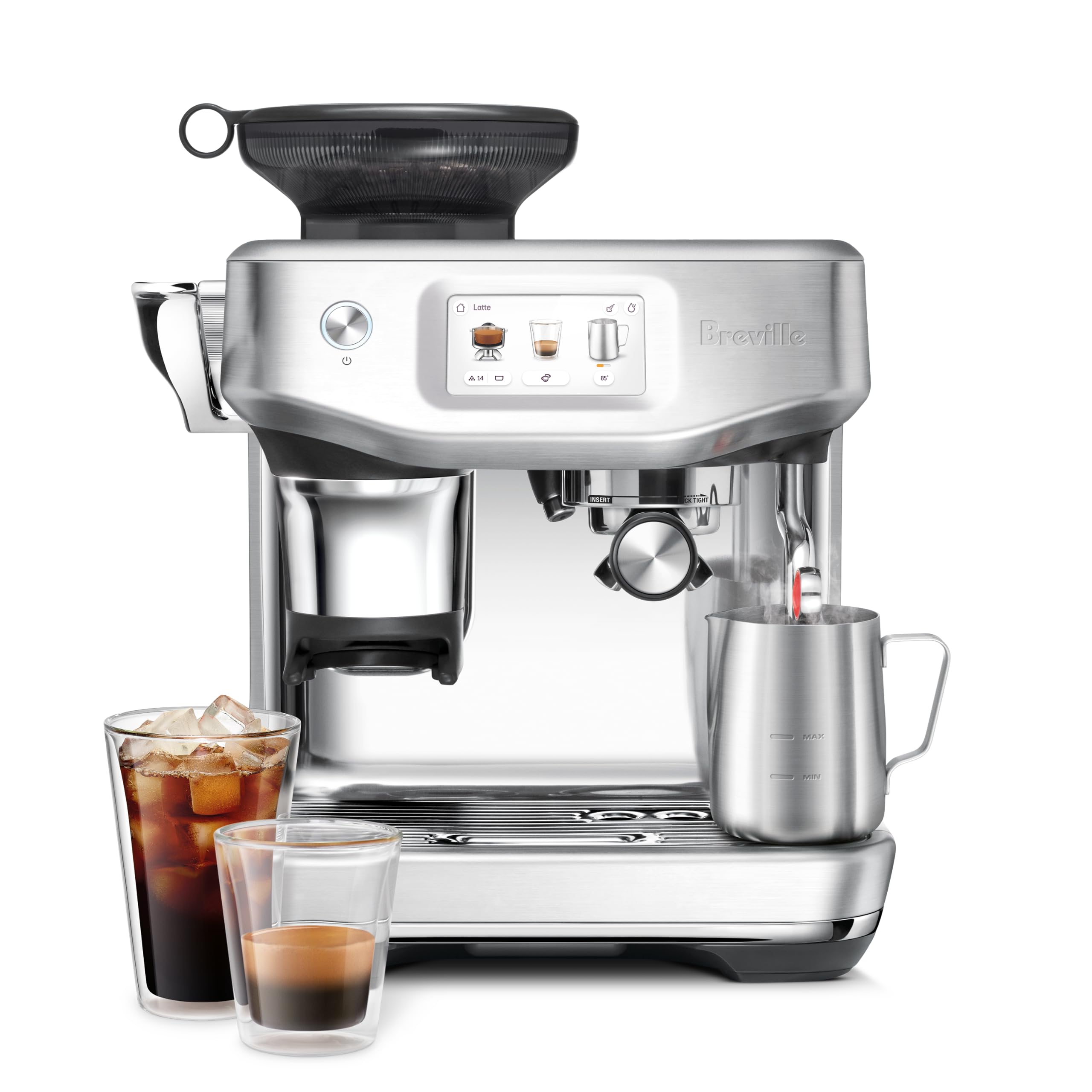
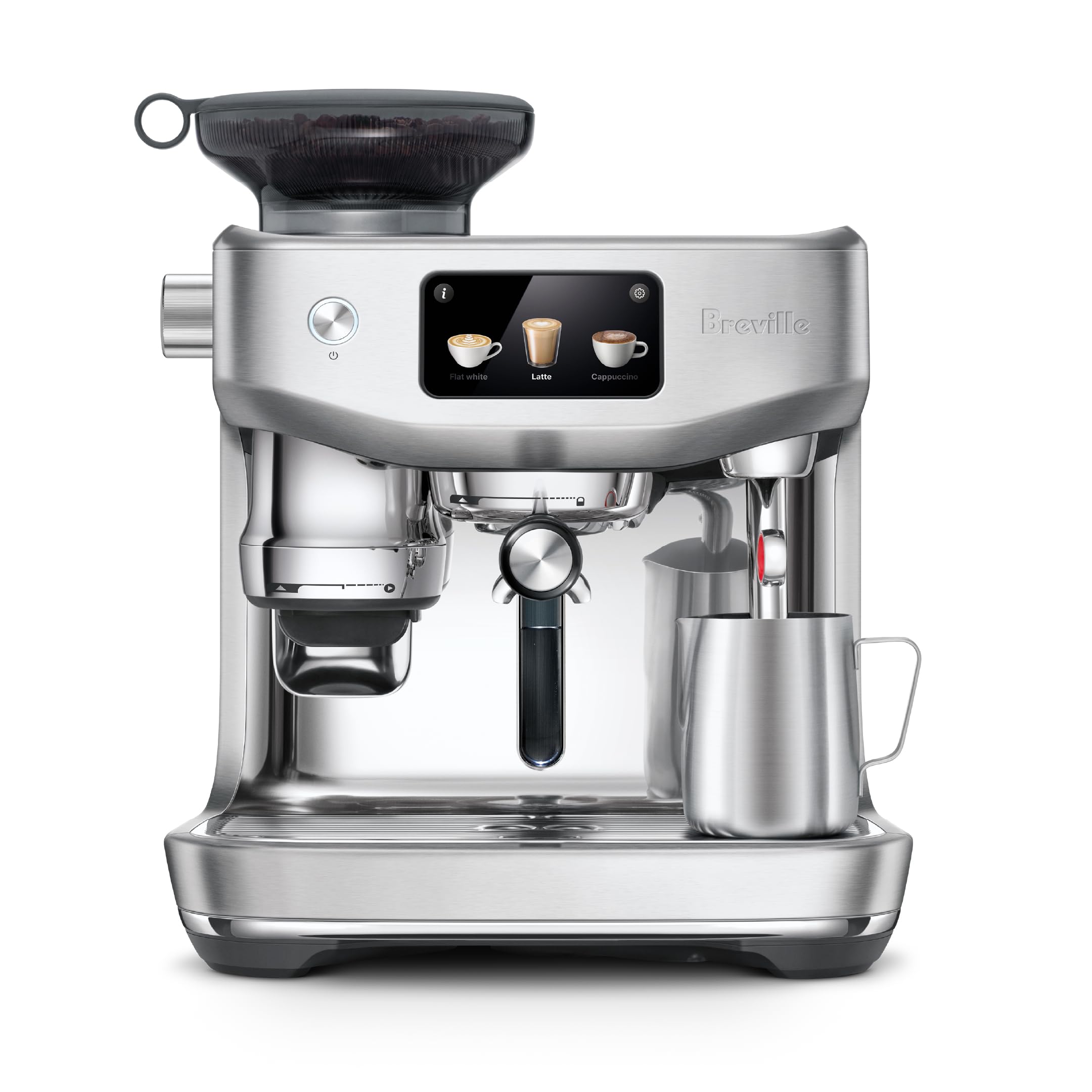
Assisted portafilter: Breville Barista Touch Impress BES881 helps correct the dose and lever tamp, with Auto MilQ milk. Oracle Jet BES985 automates more of grind/dose/tamp but retains the portafilter system.
Bean-to-cup: De'Longhi Eletta Explore ECAM45086S EX:4 prepares one-touch bean-to-cup drinks with hot/cold milk systems. It is not simply an Oracle Jet with more drink icons.
The decisions that change your shortlist
Do you enjoy preparing the puck?
The coffee puck is the bed of ground coffee in an espresso portafilter. On a manual machine, you control the amount, grind and how it is tamped. That gives you a way to learn, but it also creates work and variation if you do not enjoy the process. Bambino and Barista Express both make you participate; Express just includes grinding in the machine. Touch Impress provides an assisted lever and dose feedback, and Oracle Jet automates more of the puck setup. Eletta Explore moves to bean-to-cup automation without the same portafilter handling. If you hate this work, do not choose a manual model because it has an attractive heater specification.
Does the built-in grinder solve enough on its own?
A built-in grinder doesn't make espresso automatic. Barista Pro has a grinder with 30 settings, but you're still in charge of tamping and steaming milk. Decide whether those steps sound enjoyable or like the parts of your morning you want to remove. Touch Impress also includes a grinder, but its meaningful difference is assisted puck and milk preparation. The setting counts on the grinders do not prove a taste ranking. If you own an espresso-capable grinder and want to keep it, Bambino may avoid unnecessary duplication. If you do not own one, an integrated model simplifies the initial equipment purchase. If the goal is eliminating manual effort, distinguish the rest of the workflow rather than stopping at the word 'integrated.'
How much does hands-free milk matter?
For milk drinks, the steam-wand stage can be more important than heater startup or grinder settings. On Barista Express and Barista Pro, you texture milk manually and clean the wand after using it. Touch Impress and Oracle Jet provide Breville's Auto MilQ with manufacturer-described milk options. Ninja ES701 offers Dual Froth Pro presets including cold foam, while Eletta Explore uses LatteCrema Hot and Cool systems. Those are different implementations, not comparable taste tests. Consider what beverages you make, which milk your household prefers and who is willing to manage cleaning. If everyone drinks espresso black, skip paying extra just for an elaborate milk system you won't use.
Does a portafilter-free morning outweigh manual control?
Oracle Jet automatically grinds, doses and tamps, yet it is still a portafilter espresso machine. That architecture can appeal to someone who likes espresso preparation but wants less work in the puck stage. Eletta Explore is a different choice: a one-touch bean-to-cup model can prepare a menu drink without conventional portafilter handling. If hands-free preparation is a hard requirement, putting Oracle Jet ahead of Eletta merely because it has more grinder settings would be a mistake. If you explicitly want to retain an espresso portafilter, recommending only bean-to-cup would miss your preference. State which human movements you are willing to perform before ranking machines.
How should you compare advanced machines fairly?
Start with the task they remove, then look at the sourced implementation. Touch Impress has an assisted tamp system; Oracle Jet has automatic grind, dose and tamp; Eletta Explore automates the bean-to-cup drink. Ninja ES701 adds different brew formats but retains lever tamping. A larger portafilter diameter or advertised pump rating does not establish superior espresso flavor. Manufacturer-stated three-second ThermoJet readiness is not the entire time to serve a latte. Cold-drink menus also differ in process from overnight immersion. Use exactly these distinctions to narrow the shortlist; do not fill remaining evidence gaps with imagined reliability or live price rankings.
Common buying mistakes
Automatic does not always mean hands-off: Oracle Jet and Eletta Explore operate through different espresso architectures.
A built-in grinder does not tamp your coffee: Barista Express and Pro still involve a manual portafilter.
Do not transfer model dimensions: Oracle Jet's source-supported 58 mm/22 g system is not the same as smaller 54 mm Breville machines.
Do not infer taste from price or pressure: A high bar rating or more drink presets is not a test result.
Do not ignore the milk routine: A machine with manual steaming may not fit a household that wants automated lattes.
Where should you go next?
If you want to learn espresso with a separate grinder, start with Bambino's Verdict and its Barista Express comparison. If integrated grinding is enough, review Express versus Pro. If milk effort is the problem, compare Barista Pro versus Touch Impress. If tamping effort is the issue, compare Touch Impress versus Oracle Jet. If you want to remove portafilter handling, compare Oracle Jet versus Eletta Explore. These handoffs follow different actual preferences; none assumes one overall best espresso machine at an unverified US retail price.
What we can confirm: No current verified USD offer or independently measured overall taste or value ranking is available for these exact US machines. Price and retailer stock remain separate from buyer-fit guidance.
Explore the products
Move from advice to the product details.
See the products discussed in this guide. Use the buying advice above to decide what fits your needs.

Breville Bambino BES450BSS
Amazon.com · Checked Nov 3, 2026
An espresso beginner who values a small machine; someone who already owns a suitable espresso grinder; a home coffee drinker who wants hands-on control without a built-in grinder.
Trade-off: The grinder, tamping technique and manual steam-wand practice remain your responsibility.
Paid link · PIQSY may earn a commission

the Barista Express
US model: BES870XL
Amazon.com · Checked Nov 3, 2026
First-time home-barista households building a compact all-in-one manual setup; people who want the grind and portafilter workflow together; shoppers willing to learn espresso preparation.
Trade-off: All-in-one packaging does not remove the work of grinding, preparing a puck, extracting a shot and steaming milk.
Paid link · PIQSY may earn a commission
Barista Touch Impress
Amazon.com · Checked Nov 3, 2026
You want integrated grinding but appreciate guidance while preparing an espresso puck; You prefer hands-free milk texturing, including manufacturer-supported nondairy profiles; A touch-based recipe interface suits you better than a purely manual control workflow.
Trade-off: It helps prepare espresso without eliminating portafilter work and requires separate maintenance of milk-contact equipment.
Paid link · PIQSY may earn a commission
Oracle Jet
Amazon.com · Checked Nov 3, 2026
You want automated grind, dose and tamp with a traditional portafilter-style espresso process; You use automatic milk settings and may want cold-coffee programs; You understand that a 58 mm portafilter system is different from smaller Breville machines.
Trade-off: Advanced assistance does not turn it into a fully hands-off bean-to-cup appliance.
Paid link · PIQSY may earn a commission

Eletta Explore
US model: ECAM45086S
Amazon.com · Checked Nov 3, 2026
You want to avoid manually dosing and tamping a portafilter; You regularly make hot and cold milk-based coffee drinks; Integrated grinding and a guided one-touch drink menu fit multiple users.
Trade-off: A fully automatic beverage menu requires cleaning and ongoing system care while offering less manual puck control.
Paid link · PIQSY may earn a commission
Compare the closest choices
Move from the format to the actual product decision.
PIQSY Compare
Breville Barista Express BES870XL vs Breville Barista Pro BES878
Open comparison →PIQSY Compare
Breville Barista Pro BES878 vs Breville Barista Touch Impress BES881
Open comparison →PIQSY Compare
Breville Bambino BES450 vs Breville Barista Express BES870XL
Open comparison →PIQSY Compare
Keurig K-Café Barista Bar vs Keurig K-Elite Single Serve
Open comparison →PIQSY Compare
Keurig K-Duo Hot & Iced Gen 2 vs Keurig K-Supreme Gen 2
Open comparison →PIQSY Compare
Keurig K-Elite Single Serve vs Keurig K-Supreme Gen 2
Open comparison →Care and practical guidance
More guidance for this category.
Choose your coffee maker by the drink you make most often, the number of people you serve and the amount of work you want before each cup. K-Cup machines deliver quick single servings; a drip carafe makes more sense for several people; portafilter espresso involves grinding and puck preparation; and fully automatic bean-to-cup machines take over more of that process. None is a universal upgrade over another. If the brew format is wrong, an extra feature or attractive offer does not make the machine fit.
Coffee Machine Cleaning and Upkeep: What Changes With Each Brewing System?The maintenance job changes with the kind of machine you buy. A pod brewer avoids daily grinding and tamping but still requires water-system care and handling used pods. A drip-carafe machine adds a pot and grounds pathway. Manual espresso involves a portafilter, grinder if used separately, and a steam wand for milk. Automatic bean-to-cup reduces drink preparation work but still includes a grinder and milk-contact components to maintain. Do not choose a machine based on a fictional universal cleaning-time ranking; check its exact US manual for required frequency, products and disassembly instructions.
Do You Need a Separate Grinder for Espresso?A separate grinder is necessary for a fresh-bean setup when your espresso machine does not include one. Breville Bambino BES450, De'Longhi Stilosa EC260BK and the CASABREWS manual machines in this research have no built-in grinders. Breville Barista Express and Barista Pro include grinding, but their portafilter work and manual milk steaming remain hands-on. The right decision is not simply which machine costs less on its own. It is whether you want a flexible two-piece coffee station or a coordinated machine-and-grinder package.
Our research approach
How to interpret the product details.
Our research approach
How to interpret the product details.