PIQSY Guide
Coffee Maker Types: Pod, Drip, Espresso or Bean-to-Cup?
Choose your coffee maker by the drink you make most often, the number of people you serve and the amount of work you want before each cup. K-Cup machines deliver quick single servings; a drip carafe makes more sense for several people; portafilter espresso involves grinding and puck preparation; and fully automatic bean-to-cup machines take over more of that process. None is a universal upgrade over another. If the brew format is wrong, an extra feature or attractive offer does not make the machine fit.
The decision this guide answers
Quick answer: Choose your coffee maker by the drink you make most often, the number of people you serve and the amount of work you want before each cup.
Some shopping links may pay PIQSY a commission if you make a qualifying purchase. Editorial assessments remain independent. Affiliate disclosure
Quick answer: Choose your coffee maker by the drink you make most often, the number of people you serve and the amount of work you want before each cup. K-Cup machines deliver quick single servings; a drip carafe makes more sense for several people; portafilter espresso involves grinding and puck preparation; and fully automatic bean-to-cup machines take over more of that process. None is a universal upgrade over another. If the brew format is wrong, an extra feature or attractive offer does not make the machine fit.
Start here: the quick answer
If you are shopping for a coffee maker, answer the format question first rather than comparing machines that do fundamentally different jobs. One regular mug, a shared pot, hands-on espresso and a one-touch milk drink all lead to different shortlists. Start by ruling out brewing systems that won't make your usual drink, then compare the features of machines that actually fit.
What should you decide first?
Before comparing model names, write down your usual drink on an ordinary weekday. Is it a 10 fl oz mug of black coffee, a cappuccino made from an espresso shot, several cups for guests, or a cold milk drink? Those are different jobs. Then decide whether you accept K-Cup or Vertuo capsules, want to handle coffee grounds, or prefer beans ground inside the appliance. Finally, count how many drinks you make consecutively and whether you will prepare milk yourself. A machine that fits your favorite occasional drink but frustrates the other six mornings of the week is unlikely to be a smart purchase.
Which type fits you?
Pods for single cups: Keurig K-Elite and K-Supreme Gen 2 use K-Cups. K-Café Barista Bar adds a separate milk frother and a concentrated coffee shot; neither turns pod coffee into traditional espresso. Capsules simplify portioning but create an ongoing ecosystem choice.
Drip coffee and a carafe: K-Duo Hot & Iced Gen 2 combines K-Cup single serve with ground-coffee carafe brewing. This makes sense when one person drinks coffee on weekdays but a group wants a pot on weekends.
Manual portafilter espresso: Breville Bambino, De'Longhi Stilosa and CASABREWS CM5418 require a separate grinder for fresh beans. Barista Express and Pro integrate one but still require user tamping and steam-wand work.
Guided and multi-brew: Ninja Luxe Café Pro ES701 adds drip, espresso, rapid cold brewing and hot water. Barista Touch Impress and Oracle Jet focus on assisted or automated portafilter preparation. De'Longhi Eletta Explore EX:4 is one-touch bean-to-cup with hot/cold milk systems.
The decisions that change your shortlist
Is one mug or a full pot your normal job?
A single-serve machine is appealing because you do not prepare a pot just to drink a mug. But those conveniences matter less when four people arrive for breakfast. Repeated K-Cups are individual servings; they are not the same as setting up one ground-coffee carafe. The K-Duo Gen 2 has source-supported 6–12 cup carafe sizes, while K-Supreme Gen 2 has individual 6–12 fl oz K-Cup servings and no verified carafe mode. Do not confuse the same nominal 72 fl oz reservoir on both with the same output formats. If a carafe is required, treat that as a hard decision gate rather than giving the single-serve machine a lower score and suggesting it anyway.
Are you after actual espresso or just stronger coffee?
Espresso machines that use a prepared portafilter basket are distinct from K-Cup systems. The K-Café Barista Bar offers a concentrated 2 fl oz pod coffee shot for milk drinks; it is not a pressure-extracted espresso shot. If your ideal morning is an occasional foamy pod-based latte-style drink, that difference may not matter to your enjoyment. If you want to change the grind, dose and extraction process, it matters a great deal. The Breville Bambino has a 54 mm portafilter and manual milk wand; the Barista Express has its grinder integrated. Choose by whether you want the process rather than by a familiar beverage name on the front panel.
How involved do you want to be with beans and milk?
A manual espresso machine can be rewarding if you enjoy learning how grind and tamp affect preparation. It can be frustrating if several family members want drinks without training. Barista Pro includes a grinder but still relies on manual tamping and milk steaming. Touch Impress assists puck preparation and offers hands-free Auto MilQ. Oracle Jet moves to automatic grind, dose and tamp while retaining a portafilter. Eletta Explore is a bean-to-cup system that removes the traditional portafilter handling from the normal drink routine. These distinctions are more useful than a broad 'automatic' label, which can describe very different levels of human involvement.
Which cold drink are you really making?
A button marked Brew Over Ice means something different from a rapid cold-brew process or a cold-milk-foam preset. A Keurig with an iced function prepares coffee over ice; Ninja ES701 has a manufacturer-described rapid cold-brew method and cold foam; Oracle Jet and Eletta Explore advertise their own cold-coffee programs. None of those source claims establishes the same result as conventional long-steep immersion. If you make an iced hot-brew coffee only occasionally, that need should not force you toward a complex multi-brew station. If cold foam and cold drinks are central to your routine, the supported method and milk system become meaningful selection criteria.
Can your budget and countertop support the complete setup?
A machine without a grinder may look like a smaller purchase, but it is not a complete fresh-bean espresso station by itself. Include a capable separate grinder, preparation space, cleaning accessories and any milk container in the plan. Integrated machines reduce the number of appliances but may have larger bodies; Ninja ES701 has a substantial source-listed footprint that warrants measuring. The information available for the US models records no dated current retailer offers and lacks full operating-clearance measurements for several machines. For that reason, neither a firm under-$X recommendation nor a universal 'best compact' ranking is defensible here. Measure the actual setup and compare real complete costs when trusted offers become available.
Common buying mistakes
Buying based on a pressure number: A 15- or 20-bar advertised pump rating does not establish extraction pressure at the puck or better flavor.
Treating iced as cold brew: A brew-over-ice button doesn't establish overnight cold extraction.
Comparing only machine price: A Bambino plus a separate espresso-capable grinder is a different total purchase from a Barista Express with an included grinder.
Calling all automatics alike: Oracle Jet retains a portafilter; Eletta Explore uses one-touch bean-to-cup preparation.
Overriding a hard requirement with features: A K-Supreme cannot produce a ground-coffee carafe merely because it has multiple strength settings.
Where should you go next?
If you need one K-Cup, start with the K-Elite versus K-Supreme Gen 2 comparison. If you need a carafe, compare K-Duo with K-Supreme. If you want to learn espresso, read the Bambino and Barista Express Verdicts and their grinder-focused comparison. If you want less milk or puck work, move to the Barista Pro versus Touch Impress, Touch Impress versus Oracle Jet, or Oracle Jet versus Eletta Explore comparisons. Use the Coffee Machines Picks shortlist to find machines by daily routine, not an overall score. Before shopping, check each exact US model, included accessories, retailer condition and current price.
What we can confirm: No current verified USD offer or independently measured overall taste or value ranking is available for these exact US machines. Price and retailer stock remain separate from buyer-fit guidance.
Explore the products
Move from advice to the product details.
See the products discussed in this guide. Use the buying advice above to decide what fits your needs.
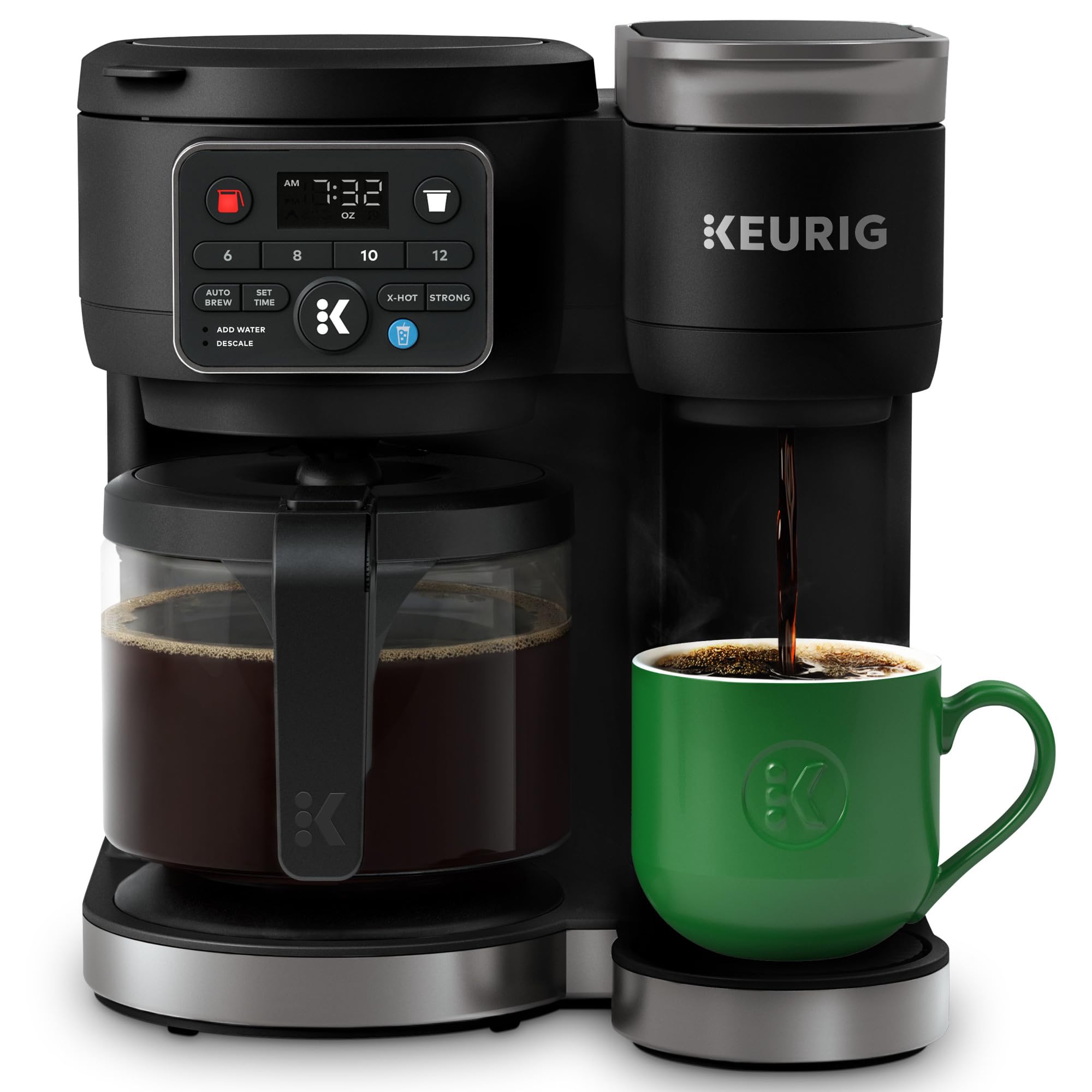
K-Duo Hot & Iced Gen 2
US model: K-Duo Hot & Iced Gen 2
Amazon.com · Checked Nov 3, 2026
You alternate between individual weekday cups and a full pot for several people; You want to use K-Cups sometimes and ground coffee for a carafe; You regularly brew over ice but do not need an espresso machine.
Trade-off: The carafe arrangement demands more counter space and still cannot make espresso.
Paid link · PIQSY may earn a commission

Luxe Cafe Pro ES701
US model: Luxe Cafe Pro ES701
Amazon.com · Checked Nov 3, 2026
You regularly switch between espresso, drip coffee and rapid cold-brew-style drinks; Integrated grinding, weighing and a hands-free frother simplify your setup; You have space for a relatively substantial countertop coffee system.
Trade-off: It brings a larger and more involved machine, and its rapid cold brew is not overnight steeping.
Paid link · PIQSY may earn a commission

Breville Bambino BES450BSS
Amazon.com · Checked Nov 3, 2026
An espresso beginner who values a small machine; someone who already owns a suitable espresso grinder; a home coffee drinker who wants hands-on control without a built-in grinder.
Trade-off: The grinder, tamping technique and manual steam-wand practice remain your responsibility.
Paid link · PIQSY may earn a commission

Eletta Explore
US model: ECAM45086S
Amazon.com · Checked Nov 3, 2026
You want to avoid manually dosing and tamping a portafilter; You regularly make hot and cold milk-based coffee drinks; Integrated grinding and a guided one-touch drink menu fit multiple users.
Trade-off: A fully automatic beverage menu requires cleaning and ongoing system care while offering less manual puck control.
Paid link · PIQSY may earn a commission
Compare the closest choices
Move from the format to the actual product decision.
PIQSY Compare
Breville Barista Express BES870XL vs Breville Barista Pro BES878
Open comparison →PIQSY Compare
Breville Barista Pro BES878 vs Breville Barista Touch Impress BES881
Open comparison →PIQSY Compare
Breville Bambino BES450 vs Breville Barista Express BES870XL
Open comparison →PIQSY Compare
Keurig K-Café Barista Bar vs Keurig K-Elite Single Serve
Open comparison →PIQSY Compare
Keurig K-Duo Hot & Iced Gen 2 vs Keurig K-Supreme Gen 2
Open comparison →PIQSY Compare
Keurig K-Elite Single Serve vs Keurig K-Supreme Gen 2
Open comparison →Care and practical guidance
More guidance for this category.
The maintenance job changes with the kind of machine you buy. A pod brewer avoids daily grinding and tamping but still requires water-system care and handling used pods. A drip-carafe machine adds a pot and grounds pathway. Manual espresso involves a portafilter, grinder if used separately, and a steam wand for milk. Automatic bean-to-cup reduces drink preparation work but still includes a grinder and milk-contact components to maintain. Do not choose a machine based on a fictional universal cleaning-time ranking; check its exact US manual for required frequency, products and disassembly instructions.
Do You Need a Separate Grinder for Espresso?A separate grinder is necessary for a fresh-bean setup when your espresso machine does not include one. Breville Bambino BES450, De'Longhi Stilosa EC260BK and the CASABREWS manual machines in this research have no built-in grinders. Breville Barista Express and Barista Pro include grinding, but their portafilter work and manual milk steaming remain hands-on. The right decision is not simply which machine costs less on its own. It is whether you want a flexible two-piece coffee station or a coordinated machine-and-grinder package.
Iced Coffee, Cold Brew and Cold Foam: Which Coffee Maker Feature Matters?"Iced coffee" can mean brewed coffee poured over ice, a rapid machine cold-coffee program, long-steeped cold extraction or a cold espresso-based drink. Cold foam is a milk preparation, not a brewing method. Those differences explain why a Keurig Brew Over Ice setting, Ninja Luxe Café Pro rapid cold brew, Breville Oracle Jet cold programs and De'Longhi Eletta Explore Cold Extraction Technology should not be treated as identical. Start with the drink you actually make, then ask whether you want hot coffee cooled over ice, a machine-specific cold process or automatic cold milk texture.
Our research approach
How to interpret the product details.
Our research approach
How to interpret the product details.