
PIQSY Guide
Do You Need a Separate Grinder for Espresso?
A separate grinder is necessary for a fresh-bean setup when your espresso machine does not include one. Breville Bambino BES450, De'Longhi Stilosa EC260BK and the CASABREWS manual machines in this research have no built-in grinders. Breville Barista Express and Barista Pro include grinding, but their portafilter work and manual milk steaming remain hands-on. The right decision is not simply which machine costs less on its own. It is whether you want a flexible two-piece coffee station or a coordinated machine-and-grinder package.
The decision this guide answers
Quick answer: A separate grinder is necessary for a fresh-bean setup when your espresso machine does not include one.
Some shopping links may pay PIQSY a commission if you make a qualifying purchase. Editorial assessments remain independent. Affiliate disclosure
Quick answer: A separate grinder is necessary for a fresh-bean setup when your espresso machine does not include one. Breville Bambino BES450, De'Longhi Stilosa EC260BK and the CASABREWS manual machines in this research have no built-in grinders. Breville Barista Express and Barista Pro include grinding, but their portafilter work and manual milk steaming remain hands-on. The right decision is not simply which machine costs less on its own. It is whether you want a flexible two-piece coffee station or a coordinated machine-and-grinder package.
Start here: the quick answer
The machine isn't the whole coffee station if you still need a grinder. A separate one gives you more flexibility to replace it later, but also needs money and counter space now. An integrated grinder simplifies shopping without making espresso hands-off.
What should you decide first?
Begin with the equipment you already own. Do you have a grinder that can make fine, repeatable adjustments suitable for espresso, and do you like using it? If yes, a standalone machine may avoid paying for another grinder you would not use. If no, compare a capable separate grinder plus a manual machine with an integrated-grinder model. Next consider your countertop: a small espresso machine body is not the entire station once grinder, grounds and milk equipment are added. Finally consider skill. A grinder can provide repeatable coffee preparation, but it does not make tamping or steaming automatic.
Which type fits you?
Standalone manual machine, external grinder: Breville Bambino BES450 has a sourced 54 mm portafilter and manual steam wand; De'Longhi Stilosa EC260BK has no certified portafilter diameter in the available product information; CASABREWS CM5418 and 3700 Essential use source-described 51 mm portafilters. None of these four has an integrated grinder.
Manual machine with integrated grinder: Barista Express BES870XL has a manufacturer-listed conical-burr grinder with 16 settings; Barista Pro BES878 has 30 settings. Both still use manually prepared portafilters and manual milk steaming.
Integrated grinder with more assistance: Barista Touch Impress BES881 adds dosing and assisted tamping plus hands-free milk. Oracle Jet BES985 automates more grinding, dosing and tamping. Ninja Luxe Café Pro ES701 provides weight-based dosing and a manual lever tamp for a multi-brew system.
One-touch bean-to-cup: Eletta Explore ECAM45086S EX:4 includes a grinder within a fully automatic preparation architecture. Buy it for the drink workflow, not merely to avoid a second grinder.
The decisions that change your shortlist
Why does a capable espresso grinder matter?
Espresso uses relatively fine ground coffee in a prepared basket. Changing the grind can affect how water moves through that basket, but the result depends on the beans, dose, basket and preparation. A grinder needs suitable adjustment and consistency for the workflow you intend to use. Calling any household blade grinder "good enough for espresso" would be an unsupported claim, as would promising that more adjustment settings automatically produce tastier coffee. If you already own a capable grinder, evaluate whether it fits the coffee and basket system you plan to use. If you do not, make the grinder part of the shopping decision from the start rather than treating it as a minor optional accessory after selecting an espresso machine.
Does an integrated grinder make espresso automatic?
No. Barista Express and Barista Pro combine a conical-burr grinder with the espresso machine. That eliminates one separate appliance purchase, but you still manage the portafilter, tamping and steam wand. The Express's 16-settings and Pro's 30-settings are sourced manufacturer facts, not an independent grinding performance ranking. A novice might find an integrated setup easier to shop for; a hobbyist could prefer choosing grinder and machine independently. If you want grinding and tamping managed automatically, Oracle Jet has a different manufacturer-described system. If you do not want portafilter handling at all, Eletta Explore's bean-to-cup architecture addresses a different requirement. Distinguish physical integration from the amount of labor removed.
How should you compare a Bambino setup with Barista Express?
Bambino BES450 has no integrated grinder; Barista Express BES870XL includes one. That is the most important difference for an initial shopping list. Bambino may fit someone who owns an espresso-capable grinder or wants independent upgrade flexibility. Express makes sense when buying a coordinated appliance with built-in grinding is the priority. Both use 54 mm portafilters and manual milk preparation, so neither avoids learning those steps. Do not compare a Bambino machine-only offer with a complete Express purchase and declare one better value. Add the separate grinder, its physical footprint and any necessary accessories before comparing total cost. Current verified US prices are absent from this research, so a hard-dollar recommendation remains unavailable.
What does changing grinders later mean?
Separate equipment can be changed independently. If you buy a Bambino and decide you want a different grinder next year, you can evaluate that component without automatically replacing the espresso machine. That flexibility matters to someone interested in learning or customizing their coffee station. An integrated grinder, on the other hand, makes the initial purchase and countertop layout more unified but ties the grinding architecture to the broader machine. Neither approach guarantees better reliability or lower lifetime cost; those claims would need repair data and real replacement costs. If the notion of choosing another grinder in the future sounds like unnecessary complexity, modularity should not be treated as a universal advantage.
What else belongs in the complete espresso setup?
Think about access for the hopper or grinder, working room to prepare a portafilter, a place for beans, water filling, milk preparation and cleaning. A source-listed 5.7-inch body width on CASABREWS 3700 Essential does not mean the entire espresso station fits in a 5.7-inch gap. The 3700's exact reservoir capacity is also conflicted in the manufacturer's material and remains unknown, so it should not influence a volume comparison. Portafilter diameters differ by model: CM5418 and 3700 are recorded at 51 mm, Bambino and several Barista machines at 54 mm, and Oracle Jet at 58 mm. Never generalize accessory compatibility across brands or models based on appearance alone.
Common buying mistakes
Buying a standalone espresso machine without budgeting for a grinder: Machine-only price is not full setup cost.
Assuming a built-in grinder means automatic tamping: Barista Express and Pro still require manual puck and milk work.
Ranking grinder setting counts as flavor measurements: Sixteen, thirty or forty-five settings describe adjustment options, not measured taste.
Guessing accessory diameters: Stilosa's diameter is not independently confirmed in the available product information; different Breville and CASABREWS models use distinct systems.
Ignoring usable clearance: You need space to operate and clean the full station, not just room for an appliance body.
Where should you go next?
If you own a grinder and want a compact manual machine, read the Bambino Verdict. If you want the grinder included, read Barista Express and the Bambino versus Express comparison. To decide whether a newer interface is worth changing machines, see Express versus Pro. If your real issue is wanting the machine to automate puck preparation, move to Touch Impress versus Oracle Jet. If you want to avoid portafilter handling completely, compare Oracle Jet with Eletta Explore. We don't have verified current US prices or complete accessory lists for every offer. Check the actual grinder, included parts and total checkout price before comparing setups.
Explore the products
Move from advice to the product details.
See the products discussed in this guide. Use the buying advice above to decide what fits your needs.

De'Longhi Stilosa Manual Espresso
Amazon.com · Checked Nov 3, 2026
You want to try manual portafilter espresso rather than pod coffee; You have, or will select, a suitable espresso grinder; You are comfortable learning to operate a manual milk wand.
Trade-off: The coffee preparation skill and compatible grinder are not included in the machine.
Paid link · PIQSY may earn a commission
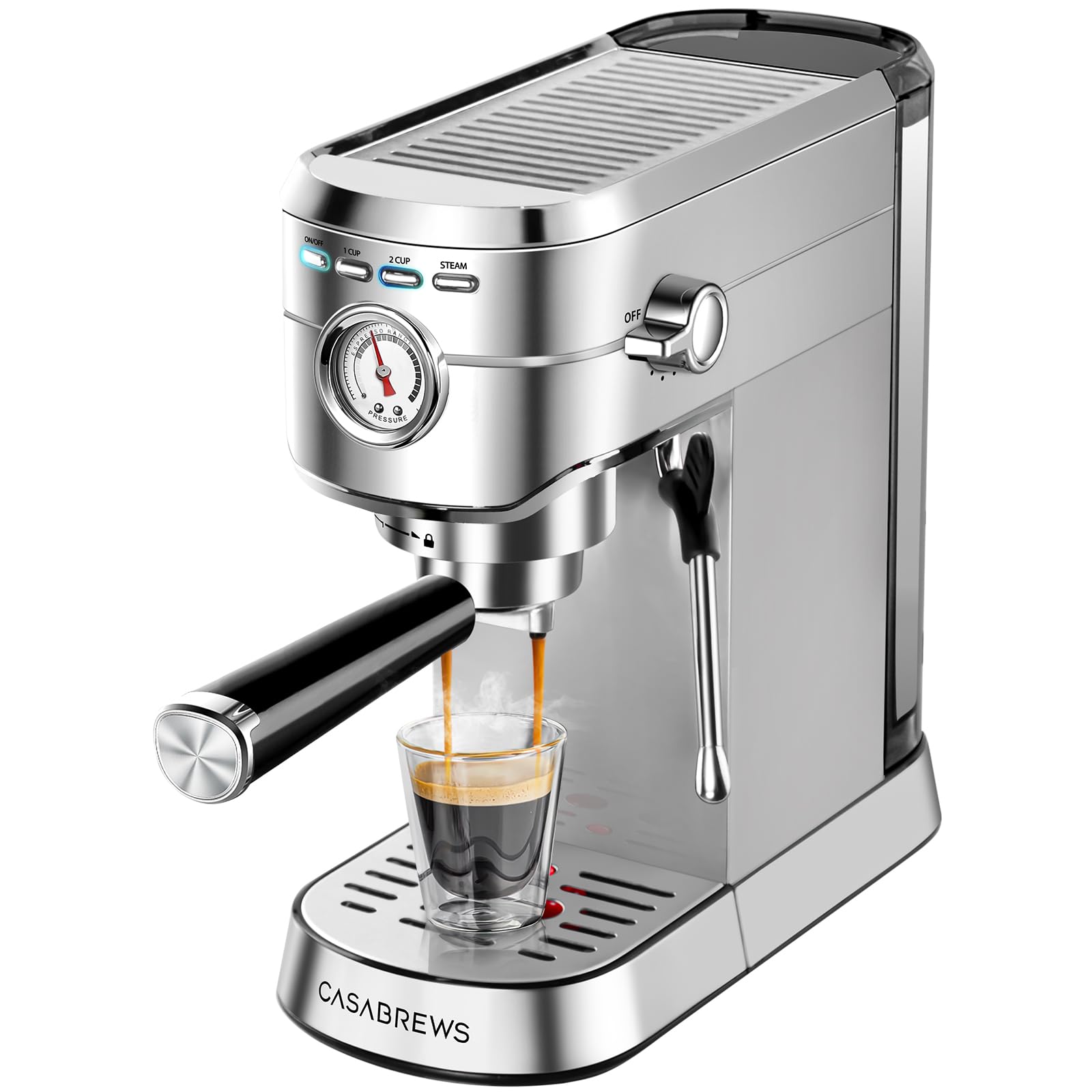
CASABREWS CM5418 Compact Espresso
Amazon.com · Checked Nov 3, 2026
You want manual espresso from ground coffee rather than a K-Cup drink; You are prepared to use a separate grinder and learn milk steaming; You want to evaluate the exact CM5418 model rather than a loosely named CASABREWS variant.
Trade-off: It leaves grinding, tamping, milk technique and cleaning in your hands.
Paid link · PIQSY may earn a commission

Breville Bambino BES450BSS
Amazon.com · Checked Nov 3, 2026
An espresso beginner who values a small machine; someone who already owns a suitable espresso grinder; a home coffee drinker who wants hands-on control without a built-in grinder.
Trade-off: The grinder, tamping technique and manual steam-wand practice remain your responsibility.
Paid link · PIQSY may earn a commission

the Barista Express
US model: BES870XL
Amazon.com · Checked Nov 3, 2026
First-time home-barista households building a compact all-in-one manual setup; people who want the grind and portafilter workflow together; shoppers willing to learn espresso preparation.
Trade-off: All-in-one packaging does not remove the work of grinding, preparing a puck, extracting a shot and steaming milk.
Paid link · PIQSY may earn a commission
Compare the closest choices
Move from the format to the actual product decision.
PIQSY Compare
Breville Barista Express BES870XL vs Breville Barista Pro BES878
Open comparison →PIQSY Compare
Breville Barista Pro BES878 vs Breville Barista Touch Impress BES881
Open comparison →PIQSY Compare
Breville Bambino BES450 vs Breville Barista Express BES870XL
Open comparison →PIQSY Compare
Keurig K-Café Barista Bar vs Keurig K-Elite Single Serve
Open comparison →PIQSY Compare
Keurig K-Duo Hot & Iced Gen 2 vs Keurig K-Supreme Gen 2
Open comparison →PIQSY Compare
Keurig K-Elite Single Serve vs Keurig K-Supreme Gen 2
Open comparison →Care and practical guidance
More guidance for this category.
Choose your coffee maker by the drink you make most often, the number of people you serve and the amount of work you want before each cup. K-Cup machines deliver quick single servings; a drip carafe makes more sense for several people; portafilter espresso involves grinding and puck preparation; and fully automatic bean-to-cup machines take over more of that process. None is a universal upgrade over another. If the brew format is wrong, an extra feature or attractive offer does not make the machine fit.
Coffee Machine Cleaning and Upkeep: What Changes With Each Brewing System?The maintenance job changes with the kind of machine you buy. A pod brewer avoids daily grinding and tamping but still requires water-system care and handling used pods. A drip-carafe machine adds a pot and grounds pathway. Manual espresso involves a portafilter, grinder if used separately, and a steam wand for milk. Automatic bean-to-cup reduces drink preparation work but still includes a grinder and milk-contact components to maintain. Do not choose a machine based on a fictional universal cleaning-time ranking; check its exact US manual for required frequency, products and disassembly instructions.
Iced Coffee, Cold Brew and Cold Foam: Which Coffee Maker Feature Matters?"Iced coffee" can mean brewed coffee poured over ice, a rapid machine cold-coffee program, long-steeped cold extraction or a cold espresso-based drink. Cold foam is a milk preparation, not a brewing method. Those differences explain why a Keurig Brew Over Ice setting, Ninja Luxe Café Pro rapid cold brew, Breville Oracle Jet cold programs and De'Longhi Eletta Explore Cold Extraction Technology should not be treated as identical. Start with the drink you actually make, then ask whether you want hot coffee cooled over ice, a machine-specific cold process or automatic cold milk texture.
Our research approach
How to interpret the product details.
Our research approach
How to interpret the product details.