
PIQSY Guide
How to choose a portable air conditioner
The decision this guide answers
Need to cool a hot bedroom but can't install a permanent unit?
Some shopping links may pay PIQSY a commission if you make a qualifying purchase. Editorial assessments remain independent. Affiliate disclosure
Need to cool a hot bedroom but can't install a permanent unit? A portable AC might solve that problem, provided you can vent its heat outside. It isn't a no-window shortcut. First make sure you can vent the heat outdoors; then choose the cooling class for your actual room, and only then compare features and prices. That order prevents the most expensive kind of summer shopping mistake: buying a capable machine that you cannot install properly.
Start here: the quick answer
For a genuinely small, enclosed, lightly shaded room, investigate a modest 5,000- or 6,000-BTU DOE/SACC portable before spending on a larger unit. For a medium room with more substantial afternoon heat, a 10,000-BTU DOE/SACC dual-hose inverter may deserve attention. For a larger, harder-to-cool enclosed space, a 12,000-BTU SACC class provides greater published capacity headroom.
These are product classes, not square-foot promises. Heat load, insulation, window exposure, ceiling height, occupants and connected rooms can change the answer. A compact, sunny upstairs room can be harder to cool than a larger shaded one.
If the only window won't accommodate a safely installed exhaust, stop comparing compressor portable ACs. Consider a suitable window unit, professional installation options or another approach that works within your building rules.
What should you decide first?
Can you actually exhaust the hot air?
A compressor air conditioner cools the room by moving heat away from it. For a portable unit, that usually means a hose connected to a panel fitted in a window. The hose and outdoor vent are essential parts of the cooling system. An appliance left running with its hot exhaust blowing back into the same room will not do the job you bought it for.
Measure the usable opening, including the tracks, locks and hardware. A nominal window size printed on a house plan isn't necessarily the space the supplied panel can occupy. Check whether your window slides vertically or horizontally, whether it has unusual hinges, and whether the vent route can stay clear without a sharply kinked hose.
Next, measure where the AC body will stand. Allow space around air intakes and any water drain. Check the cord length and use the grounded outlet arrangement specified by the manufacturer. Do not assume an extension cord or power strip is a safe workaround. If you rent, verify building rules before ordering.
Are you cooling one room or trying to fix the whole home?
A portable unit generally makes the most sense when you can close the door and target one occupied room. Open hallways, staircases and connecting rooms continually add heat and make it harder to maintain the set temperature.
Ask when the room becomes uncomfortable. Is it only after the afternoon sun reaches the glass? Do computers or people make it hotter? Does the room retain heat overnight? Those clues are often more useful than starting with a store's square-foot filter.
A large portable unit can be the right purchase, but it shouldn't be used to paper over an unsuitable cooling plan. If you need several rooms comfortable at once, investigate a properly designed multiroom solution instead.
Which portable AC type fits you?
Single-hose: simpler, often suitable for modest cooling
A single-hose unit exhausts hot air outdoors through one hose. Because some indoor air can leave with that exhaust, replacement air can enter from elsewhere in the building. In some conditions that can reduce effectiveness, particularly when the outside air is hot or humid.
This doesn't make single-hose models pointless. For a small shaded bedroom or home office, a basic LG LP0526PGF at 5,000-BTU SACC or LG LP0626PGF at 6,000-BTU SACC can be a reasonable starting point. The practical question is whether that capacity and a straightforward installation are enough for your room.
If you expect the unit to battle substantial heat all afternoon, consider a higher-capacity design instead. Don't award a single-hose unit a mythical efficiency win merely because its appliance body looks smaller.
Dual-hose inverter: worth considering for tougher rooms
A dual-hose arrangement separates the path for outdoor condenser air intake from the hot-air exhaust. Some products package those paths within a single outer assembly. The architecture is intended to avoid some of the replacement-air penalty that can occur with single-hose designs.
An inverter compressor can adjust its output according to cooling demand. That can improve temperature stability and efficiency in certain circumstances, particularly once the room is comfortable, but it is not a universal promise of lower electricity bills.
The Midea Duo MAP12S1TBL, Whynter ARC-1030WN, Whynter ARC-1230WN and Dreo 740S are all dual-hose inverter candidates with different cooling classes and fit priorities. Independent tests support useful distinctions among them, but physical installation and cooling load still decide eligibility.
What specifications actually matter?
DOE/SACC versus ASHRAE: don't compare unlike numbers
US portable AC listings may show a higher ASHRAE figure and a lower DOE/SACC figure for the same machine. They reflect different testing conventions. A product advertised as 14,000 BTU ASHRAE can also be rated at 10,000 BTU DOE. That isn't a contradiction or a defective unit.
When comparing portable cooling classes, line up the DOE/SACC figures first. Here are the published cooling classes for the models covered here:
| Example model | Published DOE/SACC cooling class |
|---|---|
| LG LP0526PGF | 5,000 BTU |
| LG LP0626PGF | 6,000 BTU |
| Midea Duo MAP12S1TBL | 10,000 BTU |
| Whynter ARC-1030WN | 10,000 BTU |
| Dreo 740S | 10,000 BTU |
| Whynter ARC-1230WN | 12,000 BTU |
The figures establish comparable advertised classes. They are not PIQSY lab measurements, guaranteed room-size limits or precise predictions of cooling time. Also avoid treating a DOE/SACC ratio as a direct electricity-cost calculation.
Dimensions matter more than “portable” suggests
A floor-standing cabinet takes space, and a hose assembly extends beyond it. Casters make moving a unit easier on a level floor, but they don't eliminate the work of fitting the vent panel again when you switch rooms.
Think about your actual furniture arrangement. A product that fits neatly beside the window may be a better household purchase than one that is a little stronger on paper but blocks the path to a door. A window kit with a published dimension range is helpful only if it matches the exact included parts and your opening style.
Be especially careful with the Whynter ARC-1030WN. Whynter's published materials describe both a 49-inch and an 82-inch upper window-kit length. The larger replacement/accessory capability does not prove every current box includes those panels. For a window wider than 49 inches, confirm the actual included kit before buying.
Noise: separate the setting from the claim
The “quietest” machine in a store description may have been measured on its lowest fan setting, under a different test method or at a distance that tells you little about sitting beside it. A bedroom buyer should look for independent measurements at comparable settings and consider where the appliance will stand.
RTINGS reports strong quietness and temperature-maintenance results for the Midea Duo and finds its fan quieter than Dreo's 740S, especially at low settings. That is specific tested context, not a guarantee of silence in every room. An inverter compressor may also make a changing or chattering sound that some people notice more than a steady fan.
A lower advertised number is not a substitute for checking placement, vibration and the setting you will actually use at night.
Power use and efficiency require context
Dual-hose and inverter engineering can make a meaningful difference, but the household result depends on weather, insulation, thermostat, runtime and electricity tariffs. The energy used to bring a room down from very hot conditions may differ from the energy used to maintain it afterward.
RTINGS finds the Midea Duo efficient at maintaining temperature, and Whynter's higher-capacity ARC-1230WN performs strongly for larger loads. Treat such results as evidence about the particular reviewed setups rather than an exact savings promise for your utility bill.
Buying too much machine for a genuinely small space is not automatically a bargain. Buying too little for a hard-to-cool room can be equally frustrating. Proper sizing comes first.
Water handling is not optional housekeeping
Cooling removes moisture from the air. Some machines evaporate much of the collected water during ordinary operation, but self-evaporating and drainage-free are not unconditional statements.
Dreo, for example, limits its drainage-free claim to environments below 90% humidity and documents a water-full protection state that requires draining. Other models also have mode- and condition-dependent water handling. Check the instruction manual, the accessibility of the drain and how you would manage water without damaging flooring.
Cleaning an air filter and keeping an exhaust unblocked also affect day-to-day performance. These chores are not reasons to reject every portable AC, but they should be part of a realistic ownership plan.
What matters less than you might think
An app that lets you cool the room from the couch is convenient. It won't fix a badly fitting exhaust panel. A manufacturer's room-coverage figure can start your shortlist, but it can't guarantee comfort in a sunny upstairs bedroom. And a retailer's thousands of reviews don't necessarily represent your exact model: review pages can mix sibling products and syndicated content.
The separate Whynter ARC-1230WNH includes heating, while ARC-1230WN does not. Similarly, the cooling-only Midea Duo MAP12S1TBL shouldn't inherit heat capabilities or review themes from another Midea Duo variant.
A price shown on a product page is only a snapshot. Compare exact model, new condition, seller, shipping, return policy and final delivered US price when you are ready to buy. Don't let a marketplace star score or affiliate link decide which cooling class is best for your room.
Common buying mistakes
Buying before measuring the window. A floor-standing unit without a workable outdoor vent is a poor choice regardless of its rating.
Comparing ASHRAE to DOE/SACC as equal measures. A 14,000-BTU ASHRAE headline is not automatically better than a 12,000-BTU SACC rating.
Sizing by floor area alone. Sun, insulation, open doors and ceiling height can change the cooling load substantially.
Assuming “quiet” means silent. Compressor and fan sounds vary by load, speed, room and testing method.
Believing “drainage-free” means no water ever. Read the humidity and mode conditions and plan drain access.
Buying a different variant by mistake. Heating siblings, Wi-Fi trims, regional suffixes and accessories can change what arrives in the box.
Ignoring the alternative. If the building permits a properly installed window AC, independent comparisons often find that approach more effective and efficient than a comparable portable. A portable is especially valuable where installation restrictions make the alternative impractical.
Where should you go next?
If you need modest, uncomplicated cooling, start with the LG LP0526PGF vs LP0626PGF comparison. For a medium room, compare Midea Duo MAP12S1TBL vs Whynter ARC-1030WN on actual installation and seller terms, or Midea vs Dreo 740S if cabinet footprint, quietness and controls influence the purchase.
For a higher heat load, read Whynter ARC-1230WN vs Midea Duo. Then open each exact-model Verdict for the details that could disqualify it. The PIQSY Picks article can guide you to a suitable starting role, but none of these pages replaces checking the current shipped hardware and seller before purchase.
The simplest rule is still the most useful: vent it properly, size it for the room, and only pay for features that solve a problem you actually have.
Explore the products
Move from advice to the product details.
See the products discussed in this guide. Use the buying advice above to decide what fits your needs.
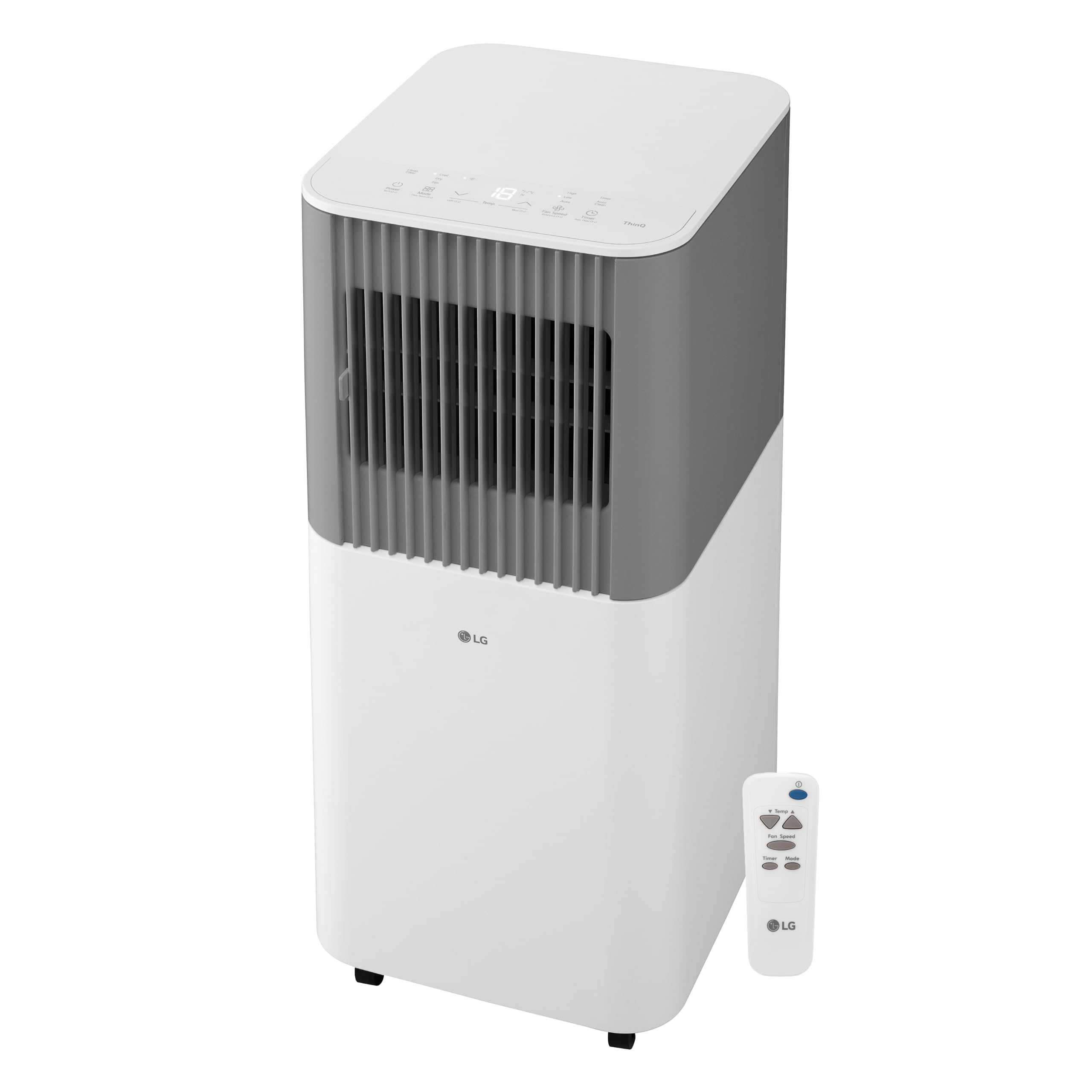
LG LP0526PGF
US model: LP0526PGF
Amazon.com · Checked Nov 3, 2026
A small bedroom or home office with a compatible venting window; someone who wants straightforward local cooling; a buyer who would rather keep controls simple.
Trade-off: Limited capacity means less headroom for larger, hotter or poorly insulated rooms.
Paid link · PIQSY may earn a commission
LG LP0626PGF
US model: LP0626PGF
A small-to-midsize enclosed bedroom, office or den with a usable exhaust window; someone who wants a remote and straightforward temperature control; a buyer who needs more capacity than the 5,000-BTU LG.
Trade-off: It is still a single-hose, relatively modest-capacity portable appliance, so installation and the room's heat load can dominate the experience.
Read Verdict →Midea MAP12S1TBL
US model: MAP12S1TBL
A medium room with meaningful afternoon heat gain; a renter who needs portable compressor cooling but has a vent-compatible window; a buyer who wants inverter operation and app-based controls.
Trade-off: A large floor-standing body and specialized venting hardware make setup and storage more involved than the name “portable” suggests.
Paid link · PIQSY may earn a commission

Whynter ARC-1030WN
US model: ARC-1030WN
Amazon.com · Checked Nov 3, 2026
A medium room with substantial heat gain, a practical venting window and a buyer willing to manage dual-hose installation; someone comparing two very similar inverter models on actual price, warranty and accessories.
Trade-off: Window-kit documentation is inconsistent, and a large floor-standing AC still takes space, makes noise and needs condensate care.
Paid link · PIQSY may earn a commission
Whynter ARC-1230WN
US model: ARC-1230WN
A larger or harder-to-cool enclosed living space, a room with substantial sun exposure, or a renter who needs high-capacity portable cooling and has a compatible window.
Trade-off: Bigger cooling equipment brings a substantial floor-space, venting and handling commitment, without guaranteeing success in every open-plan room.
Paid link · PIQSY may earn a commission
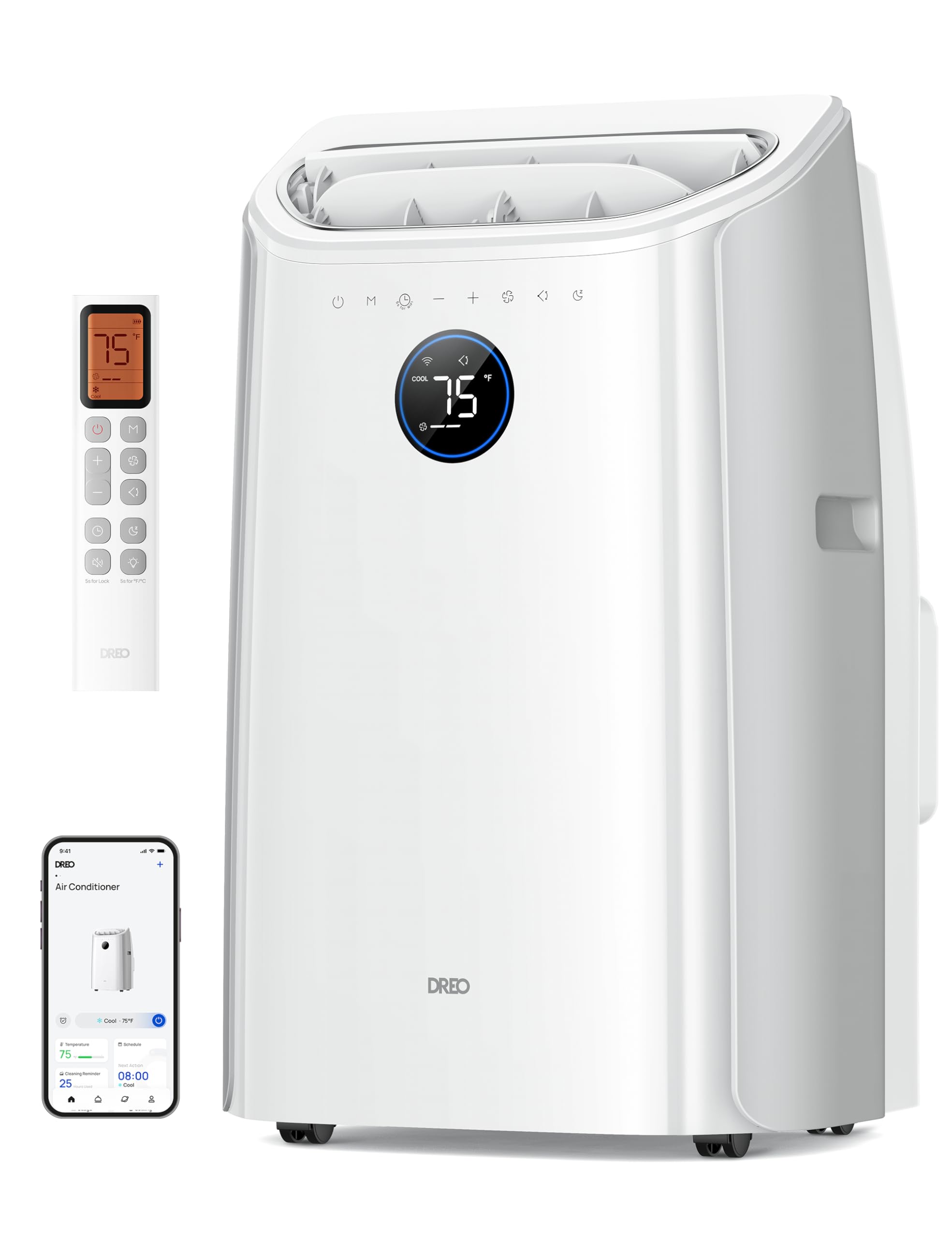
Dreo AC740S
US model: AC740S
Amazon.com · Checked Nov 3, 2026
A medium room with a compatible window, a buyer who values phone or remote controls, and someone comparing the physical fit of several dual-hose inverter designs.
Trade-off: The manufacturer has numerous attractive claims, but published humidity and noise conditions deserve careful reading; it is not the highest SACC capacity model in this shortlist.
Paid link · PIQSY may earn a commission
Compare the closest choices
Move from the format to the actual product decision.
PIQSY Compare
LG LP0526PGF vs LP0626PGF: is the extra cooling capacity worth it?
Buy too much portable AC and you may pay for cooling capacity you barely use.
Open comparison →PIQSY Compare
Midea Duo MAP12S1TBL vs Dreo Portable Air Conditioner 740S
The real choice is what your room makes difficult: Midea has stronger independent evidence for quiet, efficient cooling; Dreo is worth considering when its smaller cabinet and installation kit fit your room better.
Open comparison →PIQSY Compare
Midea Duo MAP12S1TBL vs Whynter ARC-1030WN: which 10,000-BTU portable AC should you buy?
These two portable air conditioners are far closer than their different brand names suggest.
Open comparison →PIQSY Compare
Whynter NEX ARC-1230WN vs Midea Duo MAP12S1TBL
The decision is less about the logos than the room: more rated cooling capacity for a tougher space or a lower-capacity dual-hose inverter that may be enough for ordinary medium-room cooling.
Open comparison →Our research approach
How to interpret the product details.
Our research approach
How to interpret the product details.