
PIQSY verdict
Dreo AC740S
If your sofa and window already compete for the same corner, a bulky portable AC is the last thing you want to squeeze in.
US modelAC740S
Best fit
- Medium rooms with a compatible exhaust window
- Dual-hose inverter cooling with phone or remote operation
Skip if
- You cannot vent hot air outdoors
- Your window cannot support the supplied kit
Biggest reason to buy
A 10,000-BTU DOE dual-hose inverter design supports medium-room portable cooling with flexible controls.
Main compromise
Window installation and humidity-related maintenance still determine whether this model is practical.
Last checked price
$699.99
Amazon rating
★ 4.2 · 795 ratings
Amazon.com snapshot · Nov 3, 2026
Paid link · PIQSY may earn a commission
Some shopping links may pay PIQSY a commission if you make a qualifying purchase. Editorial assessments remain independent. Affiliate disclosure
What matters
Why it earns consideration — and why you might skip it.
Decision snapshot
Choose it for
A medium room with a compatible window, a buyer who values phone or remote controls, and someone comparing the physical fit of several dual-hose inverter designs.
Know before buying
You cannot vent hot air outside, have a window outside the stated kit range, expect maintenance-free operation in high humidity, or need a guaranteed measured noise or electricity-use advantage.
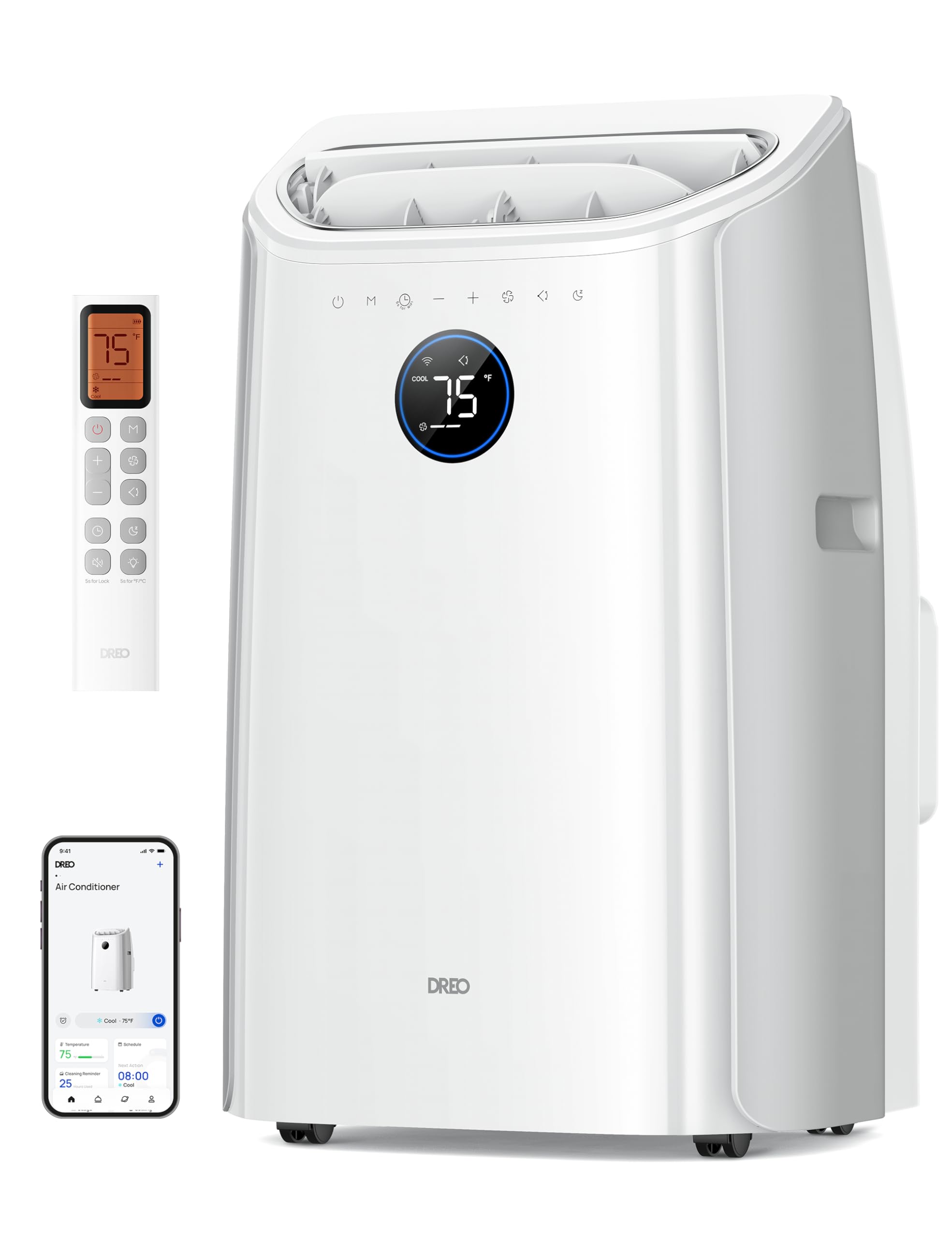
If your sofa and window already compete for the same corner, a bulky portable AC is the last thing you want to squeeze in. The Dreo 740S is worth a look when cabinet size matters. It combines a 10,000-BTU DOE cooling rating with a dual-hose inverter setup, smart controls and a relatively narrow cabinet. The best argument for it is not that it is “drainage-free” or whisper-silent in every home. It's that its particular mix of fit, controls and cooling technology might suit a room where bulk and usability matter.
Best fit: A medium room with a compatible window, a buyer who values phone or remote controls, and someone comparing the physical fit of several dual-hose inverter designs.
Skip if: You cannot vent hot air outside, have a window outside the stated kit range, expect maintenance-free operation in high humidity, or need a guaranteed measured noise or electricity-use advantage.
Biggest reason to buy: A 10,000-BTU DOE inverter/dual-hose design packaged with a documented 20–53-inch window kit and multiple control methods.
Main compromise: The manufacturer has numerous attractive claims, but published humidity and noise conditions deserve careful reading; it is not the highest SACC capacity model in this shortlist.
Who it fits
Imagine a living room where a portable air conditioner has to share space with a sofa, a bookshelf and people moving about. You want capable cooling but don't have unlimited floor room. Dreo's AC740S deserves consideration partly because cabinet dimensions and included venting hardware are unusually important in that setting.
Dreo lists the body at roughly 17.32 inches wide, 14.37 inches deep and 28.11 inches high. Those are manufacturer dimensions, not a statement that the entire installation takes up only that footprint. You must also accommodate hoses, air clearances and an accessible drain. A narrow cabinet is a benefit only when the setup still fits the room.
The advertised cooling figures are 10,000 BTU DOE and 14,000 BTU ASHRAE. Use the DOE value when comparing it with other US portable air conditioners. The ASHRAE number is not a reason to place it above Whynter's 12,000-BTU SACC ARC-1230WN in an apples-to-apples cooling-capacity ranking.
What changes the decision
Does the 10,000-BTU dual-hose class meet your heat load?
This Dreo uses a dual-hose architecture and an inverter-controlled compressor. Dual hoses manage outside intake and warm exhaust through separate air paths. Inverter operation can vary compressor output as demand changes. Those are meaningful engineering choices, but you still need a sensible room-size and installation match.
Dreo advertises rooms up to 400 square feet. Don't use that figure as a guarantee. A smaller, sunny, poorly insulated space can be harder to cool than a larger shaded one. If your living area opens directly onto another hot space, the load may be especially difficult for one floor-standing portable unit.
Start with your actual room and window before comparing the app features. If a compact LG model genuinely covers the job, buying a more complex appliance might not be necessary. If you need considerably more than the 10,000-BTU DOE class, investigate the higher-capacity Whynter rather than relying on Dreo's ASHRAE headline.
The window-kit range is a useful concrete check
Dreo specifies a kit for window heights of 20–53 inches, with four panels and two hoses included. That gives you a practical measurement to take before purchase. Measure the usable opening and check orientation; a nominal window size is not always the same as the space available for a panel once locks, tracks and handles are considered.
The hoses need a clear route outdoors and should not be squeezed behind furniture. The floor-standing unit needs a safe outlet and enough surrounding space for intake and service access. If your room does not have a suitable vent opening, an ordinary compressor portable air conditioner is not an effective “no-window” cooling solution.
If you have a particularly wide or unconventional opening, verify the exact installation details rather than assume the four panels will span any shape. A compatibility problem can outweigh the benefit of an otherwise neat cabinet.
Smart controls are helpful only if they match your routine
Dreo lists app, touch-panel, remote and voice control support. That can be convenient if you change settings from the sofa or want app-based timing. A smart control feature is not a guarantee of compatibility with every phone configuration or home network. Verify the app and account requirements if the feature is central to your purchase.
The AC740S also offers cool, dry, fan and sleep modes. Think about which you will use. A person who only turns on cooling when arriving home may get little benefit from elaborate schedules. A household that changes target temperature throughout the evening might value the controls much more.
Remote convenience is secondary to the fundamentals. If the machine has to sit where the hose blocks a walkway, no app is going to make that less annoying.
Understand the drainage-free promise before relying on it
Dreo specifies its drainage-free claim for environments below 90% humidity. That is a condition, not a lifetime promise that the unit never accumulates water. The manufacturer also describes a water-full condition requiring attention. In a humid climate, drying laundry indoors or running dehumidification mode can make water handling more relevant.
Before buying, check where the drain connects and whether you can reach it after installing the AC. An owner who cannot access the drain behind a heavy sofa may find the appliance far less convenient than expected.
Also keep the filters and exhaust route clear. Regular upkeep is not exciting, but it is part of the real cost of running a portable compressor appliance through a full season.
What independent testing changes—and what it does not
RTINGS independently reviewed the Dreo 740S using its 2026 v1.1 test methodology. The review reports strong temperature-maintenance and noise results for the settings tested, while cautioning that it is not especially power-efficient compared with some larger, similarly designed portables. That is more credible context than accepting Dreo's advertised 42 dBA lowest-noise figure as a directly comparable universal measurement.
The useful buying lesson is that efficient cooling, quiet operation and overall energy use need to be compared under similar conditions. A lowest-mode manufacturer sound claim is not a promise of 42 dBA while the machine tackles full afternoon heat. Likewise, an inverter label alone is not proof that one product always uses the least power.
Compare against the Midea Duo MAP12S1TBL and Whynter ARC-1030WN if those share your needed capacity class and fit. Compare against ARC-1230WN if you have a genuinely larger cooling load. These are different purchasing questions.
Owner views
Owner feedback still developing
Owner feedback is still developing, so PIQSY is not presenting a consensus yet.
Who should choose something else
Choose the Midea Duo MAP12S1TBL or Whynter ARC-1030WN when price, local availability or independent comparison results favor them and their window kits fit better. The Midea and Whynter are especially close technical alternatives; don't treat the Dreo as automatically more advanced simply because its product page emphasizes smart controls.
Choose Whynter ARC-1230WN when you need the larger 12,000-BTU SACC category and accept the additional physical and purchasing considerations. Choose a smaller LG if the room is modest and you mainly need simple controls and a lower cooling class.
If your climate is consistently very humid and avoiding condensate handling is a hard requirement, investigate the actual water management instructions first. Skip any unit whose drainage arrangements do not work in the available space.
PIQSY conclusion
The Dreo 740S earns a conditional recommendation for buyers who want 10,000-BTU DOE portable cooling with a specific installation footprint and multiple control options. Its hardware and published independent test evidence give it a credible role. The important compromises are its humidity-conditional drainage claim, the gap between marketed lowest noise and real operating conditions, and a capacity class below the 12,000-BTU SACC Whynter.
Dreo shows a direct offer and a customer star total, but we haven't confirmed a completed US checkout or enough carefully screened feedback from owners of this exact model to judge reliability. Evaluate the exact offer, fit and support terms before committing.
Technical detail
Specifications
See full specifications
| Product | AC740S |
|---|---|
| US model | AC740S |
| Brand | DREO |
| Capacity | 241 cubic feet |
| Cooling Power | 14000 british thermal units |
| Special Feature | 42 dB Quiet Working Noise Level, Drainage-Free, Dual-Hose, Fast Cooling, Inverter High Energy Efficiency See more |
| Product Dimensions | 14.37"D x 17.32"W x 28.13"H |
| Color | White Inverter |
| Voltage | 115 volts |
| Noise Level | 42 db |
| Refrigerant | R-32 |
| Power Source | Corded Electric |
| Additional Features | 42 dB Quiet Working Noise Level, Drainage-Free, Dual-Hose, Fast Cooling, Inverter High Energy Efficiency |
| Noise | 42 db |
| Inverter Type | Has Inverter |
| Installation Type | Packaged |
| Air Conditioner Application | Residential |
| Wattage | 1540 watts |
| Item Dimensions D x W x H | 14.37"D x 17.32"W x 28.13"H |
| Item Weight | 55.4 pounds |
| Window Opening Maximum Width | 53 inches |
| Window Opening Minimum Height | 20 inches |
| Window Opening Maximum Height | 53 inches |
| Floor Area | 200 square_feet |
| Room Type | Bedroom, Living Room |
| Brand Name | DREO |
| Model Name | DR-HAC010S White |
| Model Number | DR-HAC010S White |
| Unit Count | 1 Count |
| Included Components | 1 x DREO Portable Air Conditioners (DR-HAC010S), Window Panel×4、Air Exhaust Hose×2、Drain Hose、Remote Contro、Other installation components |
| UPC | 810142857208 |
| Manufacturer | DREO |
| Item Type Name | Portable Air Conditioners |
| Warranty Description | 12-MONTH LIMITED WARRANTY |
| Annual Energy Consumption | 1540 watts |
| Control Method | App, Remote |
| Controller Type | App Control, Remote Control |
| Operating Mode | Cooling |
| Warranty Type | Limited |
| Form Factor | Portable |
| GTIN | 810142857208 |
Amazon.com technical listing observed Nov 3, 2026. Confirm exact configuration with the manufacturer.
Final decision
Ready to choose, or want one more check?
Buying options
Check the current offer.
Amazon.com · Checked Nov 3, 2026
Paid link · PIQSY may earn a commission
Our research approach
How to interpret the product details.
Our research approach
How to interpret the product details.