PIQSY Compare
Purifier Hot+Cool HP2 De-NOx 544564-01 White/Gold vs Solaris Max (2nd Gen.)
Choose Dyson only when particle and gas filtration matter as much as supplemental heating; choose Solaris Max when you primarily need adjustable ceramic warmth.
The choice that matters
Do You Need an Air Purifier Too?
The Dyson Purifier Hot+Cool HP2 De-NOx and Dreo Solaris Max are not substitutes at the same product job.
Product comparison
The two models
Product A
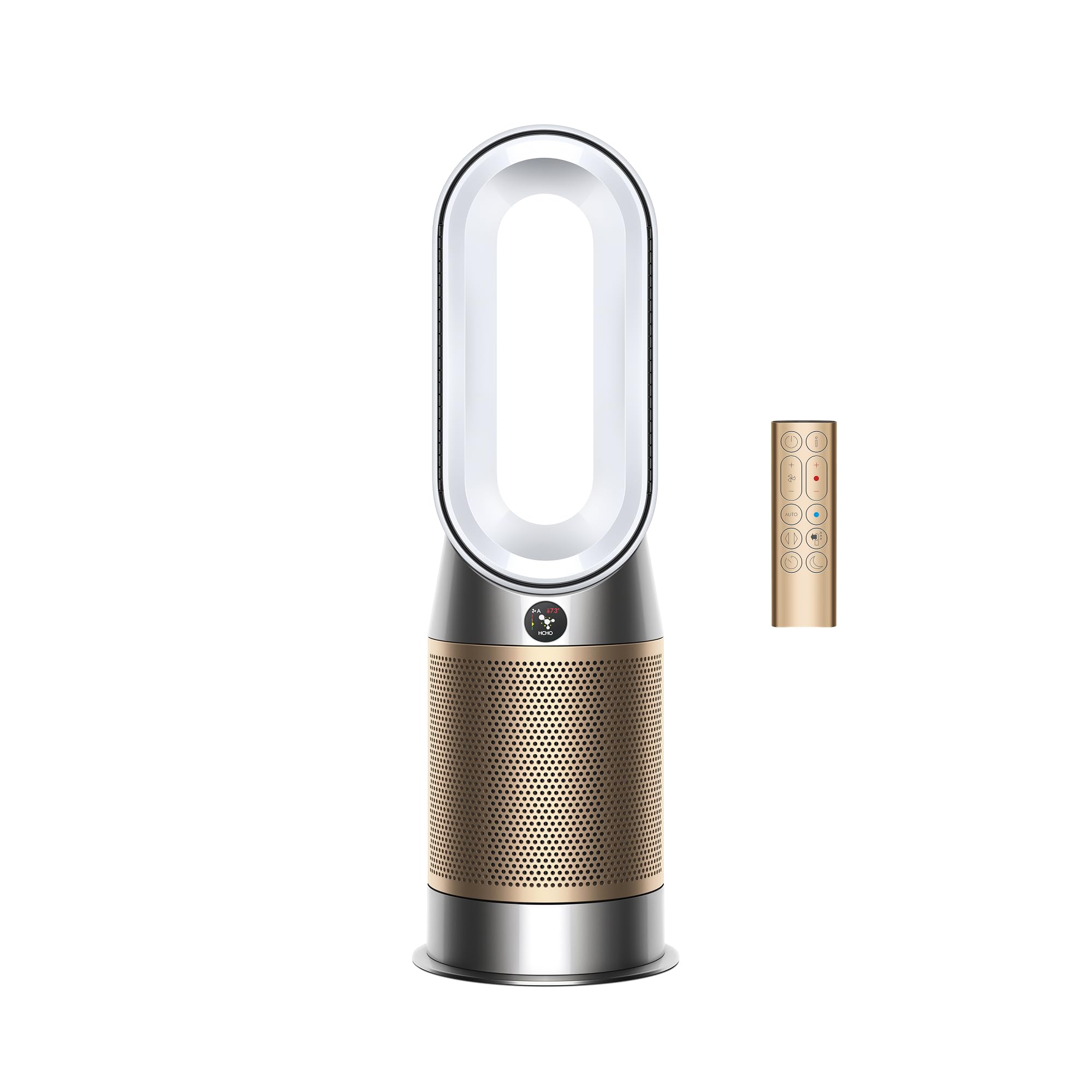
Purifier Hot+Cool HP2 De-NOx 544564-01 White/Gold
Best fit: Households wanting air filtration
Why choose it: Combined heat and purification
Main trade-off: Filter replacement and maintenance
Last checked price
$679.99
Paid link · PIQSY may earn a commission
Product B
Solaris Max (2nd Gen.)
Best fit: Occupants seeking heater-only warmth
Why choose it: Direct ceramic tower heating
Main trade-off: No filtration function
Last checked price
Price not verified
Manufacturer range · check the exact model and availability
Some shopping links may pay PIQSY a commission if you make a qualifying purchase. Editorial assessments remain independent. Affiliate disclosure
What matters when choosing
Choose Dyson only when particle and gas filtration matter as much as supplemental heating; choose Solaris Max when you primarily need adjustable ceramic warmth.
The Dyson Purifier Hot+Cool HP2 De-NOx and Dreo Solaris Max are not substitutes at the same product job. Dyson combines HEPA and gas-focused air treatment with heating and fan airflow. Dreo is a dedicated oscillating ceramic heater with thermostat and remote. The Dyson can be useful year-round as a purifier, but adds filter replacement and more features to manage. Dreo offers a much more direct route to a warm airflow stream. Decide whether purification is a real need before interpreting one brand's premium feature list as a heating-performance advantage.
What you'll actually notice
Dyson's tall loop design can move purified air with or without heating. In fan mode it may create a cooling sensation, but it is not an air conditioner and cannot refrigerate your room. Dreo uses a roughly 27-inch floor tower with 70-degree oscillation for heated airflow. Both are fan-driven, not fanless radiators. Dyson's filtration functions are meaningful, but they do not guarantee the same air quality at every location or eliminate pollution sources.
What changes the choice
Will you actually use HEPA and gas filtration?
Dyson advertises HEPA particle capture and a K-Carbon plus catalytic system for certain gases, including its De-NOx focus on nitrogen dioxide. Its 50% NO2 capture comparison comes from a specified test chamber, not a prediction that your kitchen will have 50% less NO2. If cooking, outdoor pollution or airborne particles are genuine concerns, this is the decisive difference. If you already own a capable purifier or have no separate filtration goal, don't buy a combined appliance simply because the filtration numbers look impressive. Dreo's Solaris Max is a heater, not an air cleaner.
Does the app control the heating?
Dyson's US support page for product code 544564-01 specifically says that heating control isn't available through the MyDyson app and should be operated using the machine's physical remote. The app can provide air-quality monitoring and manage supported fan or purification functions, but shouldn't be sold as remote-start space heating. Dreo Solaris Max offers a remote and on-device controls for its ordinary heating modes and thermostat. Neither device should run its heater while the room is unattended or people are sleeping. A connected feature list doesn't override that safety constraint.
How should you compare warmth and temperature controls?
Dreo specifies 1,500 watts maximum, three main heat levels, ECO and fan-only operation, a 41°F–95°F thermostat and 70-degree oscillation. Dyson also provides directed warm airflow and automatic temperature management, but the evidence does not provide a matched US exact-model test of heating speed or electricity consumption against this Dreo. Don't presume Dyson's premium positioning produces more heat from the same electrical input. Choose how the heat is directed and whether the extra purifier functions are needed, rather than a speculative efficiency ranking.
What will the total ownership experience cost?
Dyson's HEPA+K-Carbon filter needs replacement according to use and pollution level; Dyson suggests about 12 months under specified usage conditions. That adds ongoing cost and a maintenance task. Dreo's ordinary ceramic heater has a different upkeep profile: keep the inlet and outlet clean, cool and unplug before cleaning, and follow its manual. Both require a suitable open floor location with safe clearance, and a retailer's current dollar price should be checked before purchase. Dyson's US page has shown out-of-stock status, so availability is another live consideration.
Safety is a buying filter, not a footnote
For either option, follow the exact model's instructions and the CPSC's advice: keep at least three feet from combustible materials, use a suitable direct wall outlet rather than a power strip or extension cord, and turn the heater off when leaving or sleeping. A thermostat, timer or tip-over switch does not make a crowded workstation safe. If your only location fails those conditions, reconsider portable heat instead of choosing whichever model has the longest safety-feature list.
The practical choice
Start with the question that makes these products different: would you still use the Dyson's filtration when the room isn't cold? If yes, its combined functions may justify the extra upkeep. If not, the Solaris Max is the more direct heater-first choice. Neither should be bought for untested promises of faster warming or lower electricity bills.
When to choose Dyson HP2 De-NOx White/Gold
Choose Dyson HP2 De-NOx when you want a purifier throughout the year and value a single floor appliance that also provides supervised warmth. Confirm the exact White/Gold product code and filter costs. Do not expect app-triggered heating or compressor air conditioning.
When to choose Dreo Solaris Max (2nd Gen.)
Choose Dreo Solaris Max when warm air distribution and thermostat control are the central job. Its 70-degree oscillation and simpler heater-first design avoid adding filter maintenance you may not need. Don't claim that Dreo is measured to heat faster without a matched test.
Choose neither when
If you need real cooling during hot weather, choose an air conditioner. If you want a fanless heating experience, choose an oil-filled radiator. Neither device makes sense where furniture, curtains or a power strip prevent proper installation. Check the actual model label against relevant CPSC recalls rather than judging an entire brand.
PIQSY conclusion
Choose Dyson only when particle and gas filtration earn their place alongside supplemental heat; choose Solaris Max when your main job is adjustable ceramic warmth. If you already have suitable air purification, an extra filter system may bring more upkeep than benefit. Neither model is a verified universal winner for efficiency, quietness or safety.
Final comparison
Which fits your priorities?
Product A
Purifier Hot+Cool HP2 De-NOx 544564-01 White/Gold
Choose when: The Dyson Purifier Hot+Cool HP2 De-NOx White/Gold, associated with US product code 544564-01, makes sense when you are shopping for two different household functions: supplemental heating and air purification.
Read Verdict →Product B
Solaris Max (2nd Gen.)
Choose when: The Dreo Solaris Max (2nd Gen.) is built around the idea that a space heater should be easy to adjust while you move around a frequently occupied room.
Read Verdict →Product details
Model details
See available model specifications
| Detail | Purifier Hot+Cool HP2 De-NOx 544564-01 White/Gold | Solaris Max (2nd Gen.) |
|---|---|---|
| US model | Purifier Hot+Cool HP2 De-NOx 544564-01 White/Gold | Solaris Max (2nd Gen.) |
| Product Dimensions | 6.1 x 8.66 x 36.34 inches; 12.24 pounds | Not recorded |
| Item model number | HP12 ZZ | Not recorded |
| Batteries | 1 Nonstandard Battery batteries required. (included) | Not recorded |
| Date First Available | June 3, 2025 | Not recorded |
| Manufacturer | Dyson | Not recorded |
| Power Source | Electric | Not recorded |
| Control Method | App, Remote | Not recorded |
| Filter Type | HEPA | Not recorded |
| Floor Area | 109 square_feet | Not recorded |
| Particle Retention Size | 0.3 | Not recorded |
| Controller Type | Remote Control | Not recorded |
| Contaminant Filtration Capability | True | Not recorded |
| Special Features | App Connectivity, Fan, HEPA Filter, Heater | Not recorded |
| Filter Class | HEPA H13 | Not recorded |
| Software Update Supported to Date | unknown | Not recorded |
| Brand Name | Dyson | Not recorded |
| Model Number | HP12 ZZ | Not recorded |
| Model Name | Air Purifier Fan Heater | Not recorded |
| UPC | 885609035543 | Not recorded |
| Number of Packs | 1 | Not recorded |
| Unit Count | 1 Count | Not recorded |
| Included Components | Dyson Purifier Hot+Cool HP2 De-NOx, Filter, Remote | Not recorded |
| Item Type Name | Purifier | Not recorded |
| Part Number | HP2 | Not recorded |
| Item Dimensions D x W x H | 6.1"D x 8.66"W x 36.34"H | Not recorded |
| Item Weight | 12.2 pounds | Not recorded |
| Specification Met | CARB Certified, EPA Certified | Not recorded |
| Color | White/Gold | Not recorded |
Source: exact-US retained listing observations (latest checked 11/3/2026). Check current configuration with the manufacturer; these are not comparative performance tests.
Keep comparing
Related comparisons worth checking.
Our research approach
How to interpret the product details.
Our research approach
How to interpret the product details.