
PIQSY Picks
Portable air conditioners worth considering for different rooms
The decision this shortlist answers
The best portable AC isn't necessarily the biggest or the smartest.
Some shopping links may pay PIQSY a commission if you make a qualifying purchase. Editorial assessments remain independent. Affiliate disclosure
Product shortlist
Products covered in this guide.
Browse the products covered in this guide. The order does not indicate a ranking.
In this guide
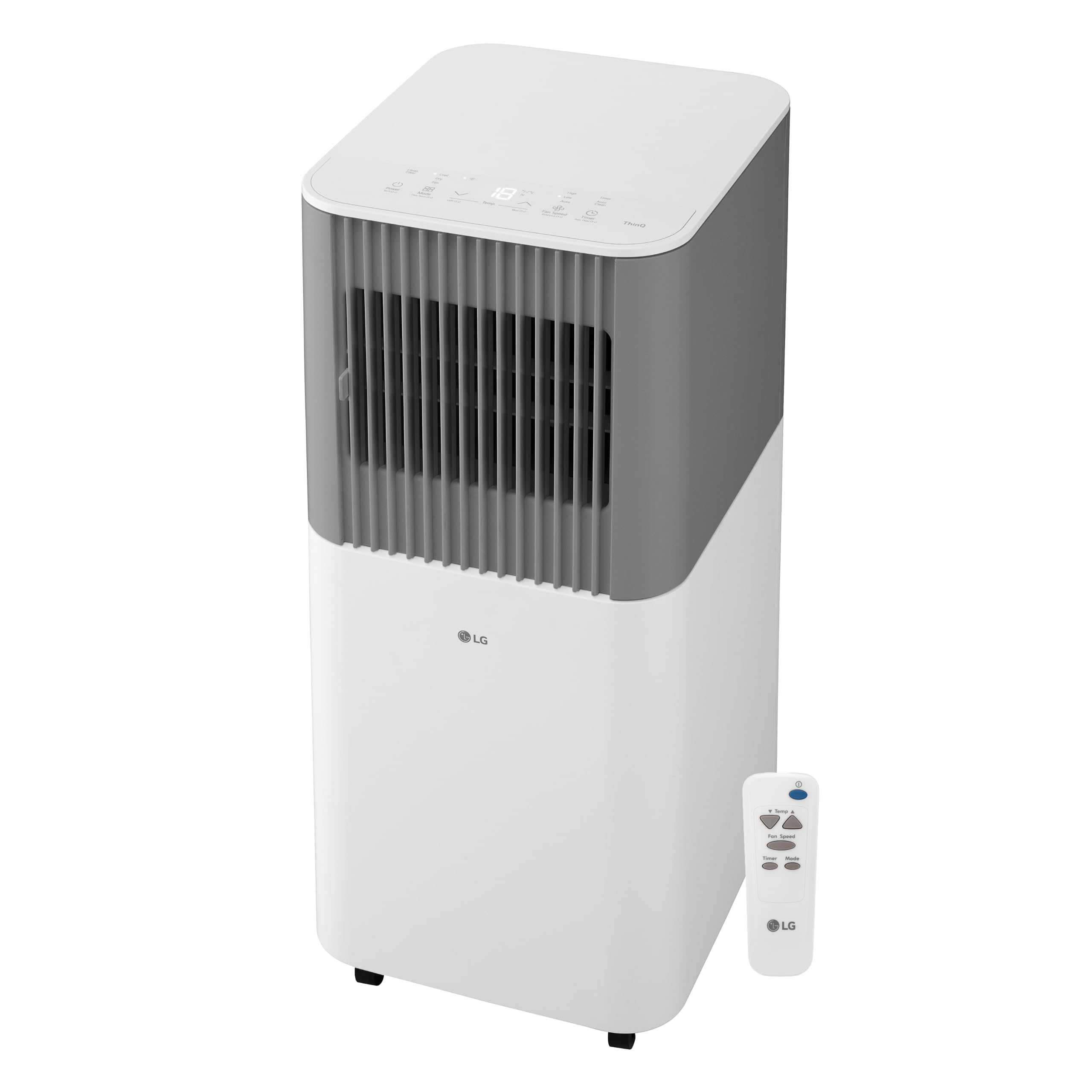
LG LP0526PGF
US model: LP0526PGF
Amazon.com · Checked Nov 3, 2026
Who it fits: A small enclosed bedroom, study or home office with modest heat gain and a compatible venting window.
Paid link · PIQSY may earn a commission
In this guide
LG LP0626PGF
US model: LP0626PGF
Who it fits: A room that seems too warm for the 5,000-BTU class but doesn't warrant a much larger 10,000-BTU dual-hose design.
In this guide
Midea MAP12S1TBL
US model: MAP12S1TBL
Who it fits: A medium enclosed room with substantial heat gain and a buyer who wants a 10,000-BTU DOE dual-hose inverter rather than a small entry-level portable.
Paid link · PIQSY may earn a commission
In this guide

Whynter ARC-1030WN
US model: ARC-1030WN
Amazon.com · Checked Nov 3, 2026
Who it fits: Someone considering the 10,000-BTU DOE/SACC class whose installed window hardware, seller options or after-sales terms favor Whynter over Midea.
Paid link · PIQSY may earn a commission
In this guide
Whynter ARC-1230WN
US model: ARC-1230WN
Who it fits: A substantial room with recurring high heat gain where the 10,000-BTU class may not provide enough headroom.
Paid link · PIQSY may earn a commission
In this guide
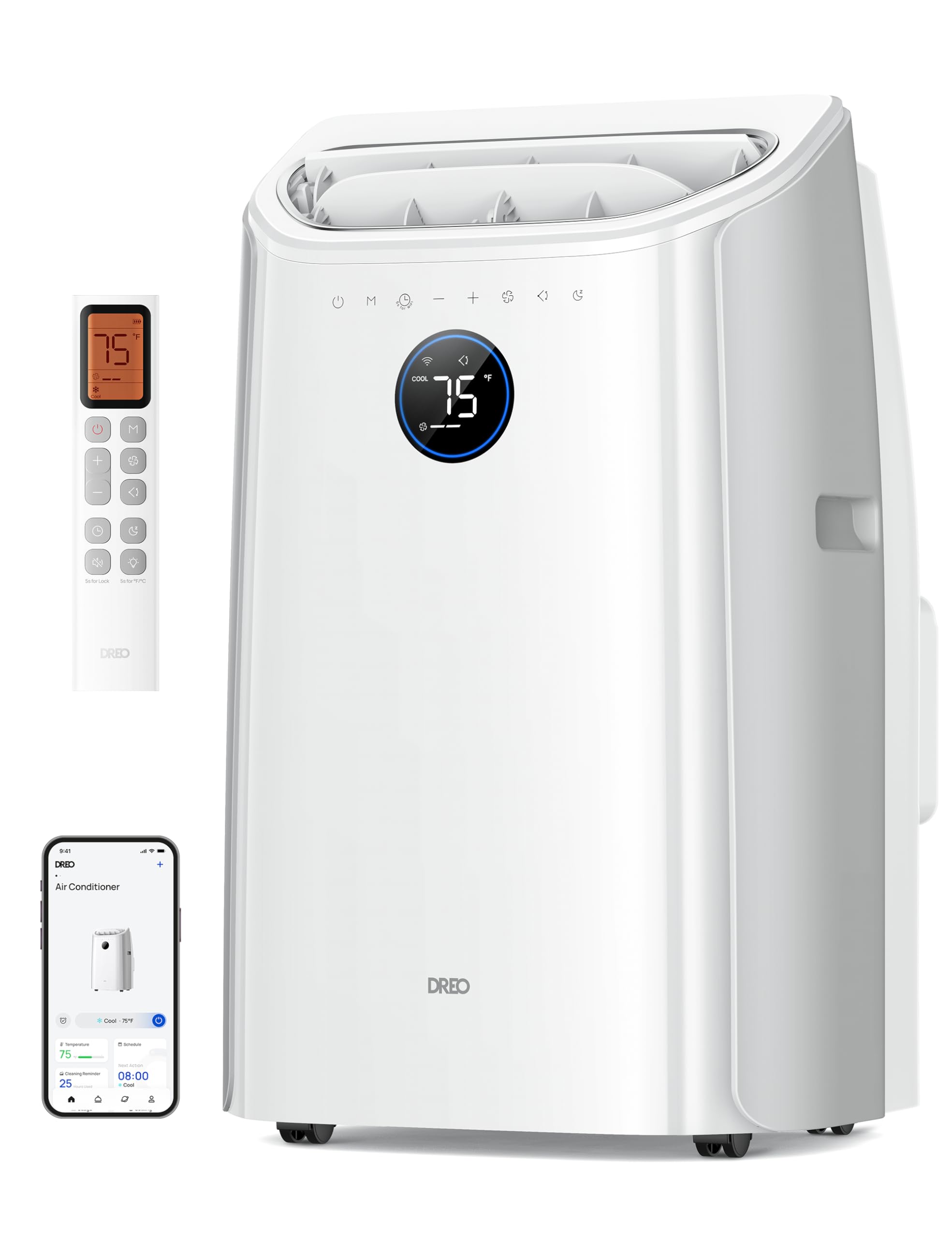
Dreo AC740S
US model: AC740S
Amazon.com · Checked Nov 3, 2026
A medium room with a compatible window, a buyer who values phone or remote controls, and someone comparing the physical fit of several dual-hose inverter designs.
Trade-off: The manufacturer has numerous attractive claims, but published humidity and noise conditions deserve careful reading; it is not the highest SACC capacity model in this shortlist.
Paid link · PIQSY may earn a commission
The best portable AC isn't necessarily the biggest or the smartest. It's the one you can vent through your actual window that can handle the room you want comfortable. That might be a simple 5,000-BTU unit, a quieter dual-hose inverter or a higher-capacity machine. There is no honest universal #1 across all those needs. Choose the role that sounds like your room, then read the trade-offs before checking a current US offer.
These are shortlist roles based on product fit, not guaranteed purchase rankings or a claim that PIQSY has hands-on tested each machine. All six selected models are cooling-only US variants. If you need heat as well, the model choice changes.
Quick picks by the job you need done
| Your buying job | Model to investigate | Why it is on this shortlist |
|---|---|---|
| Small shaded room and basic controls | LG LP0526PGF | 5,000-BTU SACC compact cooling class |
| Small room with a little more heat to manage | LG LP0626PGF | 6,000-BTU SACC step up without Wi-Fi |
| Medium room, quieter tested dual-hose cooling | Midea Duo MAP12S1TBL | 10,000-BTU DOE inverter with strong independent noise and efficiency context |
| Similar 10,000-BTU design, alternative seller/support | Whynter ARC-1030WN | Closely related to Midea; choose by fit and verified delivered offer |
| Higher heat-load enclosed room | Whynter ARC-1230WN | 12,000-BTU SACC dual-hose inverter class |
| Medium room where appliance footprint is critical | Dreo 740S | Narrower dual-hose inverter body and published 20–53-inch kit range |
A manufacturer's advertised coverage area is only a starting clue. Sun, insulation, ceiling height, humidity and whether the door stays closed can make the actual cooling job very different from a square-foot label.
For the small room where simple cooling is enough: LG LP0526PGF
Who it fits: A small enclosed bedroom, study or home office with modest heat gain and a compatible venting window. LG rates this model at 5,000 BTU DOE/SACC and 8,500 BTU ASHRAE. The two values use different testing procedures. For comparison against the other models here, focus on the 5,000-BTU SACC class.
Why choose it: Sometimes you just want to set a temperature, use the remote and get back to what you were doing. This LG has the straightforward controls and included window hardware that suit that routine. It avoids turning a modest cooling task into a large appliance purchase.
What might change your mind: Strong afternoon sun, a top-floor roof or lots of running electronics can make a nominally small room a tougher job. If the heat load is borderline, investigate the 6,000-BTU LG. Do not assume the manufacturer calling the unit quiet proves a measured bedroom noise advantage. We don't have an independent sound comparison for this exact model.
Next read: LG LP0526PGF Verdict(../verdicts/lg-lp0526pgf.mdx) and LG 5,000 vs 6,000 comparison(../comparisons/lg-lp0526pgf-vs-lg-lp0626pgf.mdx).
For a little more cooling headroom: LG LP0626PGF
Who it fits: A room that seems too warm for the 5,000-BTU class but doesn't warrant a much larger 10,000-BTU dual-hose design. LG lists 6,000 BTU SACC and 10,000 BTU ASHRAE for the US LP0626PGF.
Why choose it: You get a modest step up in rated capacity without losing the straightforward controls that make a basic portable AC appealing. For a household that doesn't care about another app, this is a legitimate benefit.
What might change your mind: The extra 1,000-BTU SACC is not a guarantee of exactly 20% faster cooling, nor does it establish a noise or energy advantage. Compare room heat load and the actual dealer price. If you want smartphone control, this selected LP0626PGF is distinct from the Wi-Fi LP0626PGSF trim. Be sure the seller sends the model you intended.
Next read: LG LP0626PGF Verdict(../verdicts/lg-lp0626pgf.mdx) and the LG capacity comparison(../comparisons/lg-lp0526pgf-vs-lg-lp0626pgf.mdx).
For a medium room where tested quietness and efficiency matter: Midea Duo MAP12S1TBL
Who it fits: A medium enclosed room with substantial heat gain and a buyer who wants a 10,000-BTU DOE dual-hose inverter rather than a small entry-level portable.
Why choose it: Independent RTINGS testing reports good temperature stability and quietness for the exact MAP12S1TBL. In its comparison with Dreo 740S, RTINGS finds Midea more power-efficient at cooling and maintaining the chosen temperature, with significantly quieter fan performance at lower settings. Those are practical reasons for a person who works or sleeps near the unit.
The two-in-one hose assembly separates condenser intake and exhaust paths. That can address the replacement-air penalty of some single-hose portables, but it doesn't remove the need for a properly sealed window installation.
What might change your mind: This is still a substantial cabinet with hoses. It may be too bulky for a narrow room, and a similarly designed Whynter ARC-1030WN may be preferable if its seller terms and included accessories work better. This selected Midea model is cooling-only. Some retailer review aggregates include heating Duo variants and syndicated feedback, so don't treat a pooled star rating as independently verified owner consensus.
Next read: Midea Duo Verdict(../verdicts/midea-duo-map12s1tbl.mdx), Midea vs Dreo(../comparisons/midea-duo-map12s1tbl-vs-dreo-ac740s.mdx) and Midea vs Whynter ARC-1030WN(../comparisons/midea-duo-map12s1tbl-vs-whynter-arc-1030wn.mdx).
For a closely related alternative when the offer and fit are better: Whynter ARC-1030WN
Who it fits: Someone considering the 10,000-BTU DOE/SACC class whose installed window hardware, seller options or after-sales terms favor Whynter over Midea.
Why choose it: The ARC-1030WN has a dual-hose inverter design and similar performance to the Midea Duo in RTINGS' independent assessment. In practice, this is an offer-and-installation comparison, not a dramatic difference in cooling technology.
What might change your mind: Whynter has published conflicting information about the included window-kit length. One source refers to an 82-inch capacity, while another lists a 49-inch maximum, and an older manufacturer customer-service answer described additional hardware for wider openings. For a window wider than 49 inches, do not buy on the assumption that the required panels are in every box. Ask the exact seller to confirm the supplied kit.
Also compare real new-condition delivered prices and return terms. An Add to Cart button on Whynter's web store does not certify a completed purchase or ongoing inventory. This role is valuable only if it solves an actual price, installation or service problem.
Next read: Whynter ARC-1030WN Verdict(../verdicts/whynter-nex-arc-1030wn.mdx) and Whynter vs Midea(../comparisons/midea-duo-map12s1tbl-vs-whynter-arc-1030wn.mdx).
For a larger or harder-to-cool enclosed space: Whynter ARC-1230WN
Who it fits: A substantial room with recurring high heat gain where the 10,000-BTU class may not provide enough headroom. Whynter advertises 12,000 BTU SACC and 14,000 BTU ASHRAE for the cooling-only ARC-1230WN.
Why choose it: The higher SACC class is a genuine, relevant specification difference. RTINGS has independently tested this model and reports strong higher-capacity cooling and efficiency in its evaluated scenarios. It gives buyers with hotter, larger rooms a meaningful alternative to sizing every portable AC as though the same capacity fits all.
What might change your mind: The bigger cabinet and vent arrangement need space. A higher cooling rating does not guarantee comfort across multiple connected rooms. If your medium room is already a reasonable fit for the Midea Duo, paying for more capacity may offer little benefit. Check the exact kit and safe outlet arrangement before treating the larger unit as an upgrade.
Do not confuse this ARC-1230WN cooling-only model with the separate ARC-1230WNH heating version. Retailer review pages have mixed their feedback, so an aggregated rating is not an exact-model reliability finding.
Next read: Whynter ARC-1230WN Verdict(../verdicts/whynter-nex-arc-1230wn.mdx) and Whynter 12,000 vs Midea 10,000(../comparisons/whynter-arc-1230wn-vs-midea-duo-map12s1tbl.mdx).
For a medium room where space and controls dominate: Dreo 740S
Who it fits: A buyer looking for 10,000-BTU DOE dual-hose inverter cooling whose window location, furniture and preference for smart controls make a narrower cabinet valuable.
Why choose it: Dreo publishes a body approximately 17.32 inches wide, 14.37 inches deep and 28.11 inches high, with a 20–53-inch window-kit range and app, remote, touch and voice controls. RTINGS describes the 740S as noticeably more compact than the Whynter ARC-1030WN. That may change your installation decision in a tight apartment.
What might change your mind: RTINGS finds the Midea Duo quieter and more efficient under its reviewed conditions. Dreo's advertised 42 dBA minimum is not a claim about full-load operation next to your bed. Its drainage-free wording applies below 90% humidity, while its troubleshooting instructions still describe a water-full state requiring draining.
If the Midea fits comfortably and the verified price is comparable, Midea has the stronger independent testing case for noise and efficiency. Choose Dreo when its physical size and actual control experience solve a more important problem for you.
Next read: Dreo 740S Verdict(../verdicts/dreo-ac740s.mdx) and Midea vs Dreo(../comparisons/midea-duo-map12s1tbl-vs-dreo-ac740s.mdx).
Which should you skip entirely?
Skip all six if you have no workable way to exhaust hot air outdoors, cannot connect the unit to an appropriate outlet, or need the appliance itself to provide heating. All six models in this first shortlist are selected cooling-only configurations.
If you need to cool several rooms through open doors, consider a different system rather than assuming one high-BTU portable can handle the whole apartment. If your building permits a suitable window air conditioner, independent testing generally supports comparing that approach on installation, cooling performance and efficiency before committing to a floor-standing unit.
For a very large or unusually complex room, a real heat-load assessment is more useful than a manufacturer's advertised coverage area. Don't rely on an arbitrary square-foot winner.
How to compare price and reliability responsibly
Each shortlist role is based on product capability, intended use and practical constraints. It's not a ranking shaped by commissions, popularity or a momentary sale. Once you narrow the list to two suitable machines, check the exact current US model and condition, seller, delivered price, return rules, warranty and availability.
More stars don't automatically mean fewer breakdowns. Some stores mix feedback on heating and cooling versions or repeat the same comments across retailers. Until reviews are clearly tied to the exact model and duplicates are excluded, a higher star count can't settle reliability.
For now, read the Portable AC Buying Guide(../guides/how-to-choose-a-portable-air-conditioner-us.mdx) to confirm exhaust, DOE/SACC sizing and drainage basics. Then use the relevant comparison to make the final trade-off. The best choice is the one that fits your actual room—not the model with the most impressive-looking headline.
PIQSY decision map
Find your fit
Explore the buying needs covered in this guide and the products discussed for each.
For the small room where simple cooling is enough: LG LP0526PGFProducts discussed for this buying need.
LG LP0526PGF
Who it fits: A small enclosed bedroom, study or home office with modest heat gain and a compatible venting window.
Read Verdict →LG LP0626PGF
Who it fits: A room that seems too warm for the 5,000-BTU class but doesn't warrant a much larger 10,000-BTU dual-hose design.
Read Verdict →For a little more cooling headroom: LG LP0626PGFProducts discussed for this buying need.
LG LP0526PGF
Who it fits: A small enclosed bedroom, study or home office with modest heat gain and a compatible venting window.
Read Verdict →LG LP0626PGF
Who it fits: A room that seems too warm for the 5,000-BTU class but doesn't warrant a much larger 10,000-BTU dual-hose design.
Read Verdict →For a medium room where tested quietness and efficiency matter: Midea Duo MAP12S1TBLProducts discussed for this buying need.
Midea MAP12S1TBL
Who it fits: A medium enclosed room with substantial heat gain and a buyer who wants a 10,000-BTU DOE dual-hose inverter rather than a small entry-level portable.
Read Verdict →Whynter ARC-1030WN
Who it fits: Someone considering the 10,000-BTU DOE/SACC class whose installed window hardware, seller options or after-sales terms favor Whynter over Midea.
Read Verdict →Dreo AC740S
A medium room with a compatible window, a buyer who values phone or remote controls, and someone comparing the physical fit of several dual-hose inverter designs.
Read Verdict →For a closely related alternative when the offer and fit are better: Whynter ARC-1030WNProducts discussed for this buying need.
Midea MAP12S1TBL
Who it fits: A medium enclosed room with substantial heat gain and a buyer who wants a 10,000-BTU DOE dual-hose inverter rather than a small entry-level portable.
Read Verdict →Whynter ARC-1030WN
Who it fits: Someone considering the 10,000-BTU DOE/SACC class whose installed window hardware, seller options or after-sales terms favor Whynter over Midea.
Read Verdict →For a larger or harder-to-cool enclosed space: Whynter ARC-1230WNProducts discussed for this buying need.
Midea MAP12S1TBL
Who it fits: A medium enclosed room with substantial heat gain and a buyer who wants a 10,000-BTU DOE dual-hose inverter rather than a small entry-level portable.
Read Verdict →Whynter ARC-1230WN
Who it fits: A substantial room with recurring high heat gain where the 10,000-BTU class may not provide enough headroom.
Read Verdict →For a medium room where space and controls dominate: Dreo 740SProducts discussed for this buying need.
Midea MAP12S1TBL
Who it fits: A medium enclosed room with substantial heat gain and a buyer who wants a 10,000-BTU DOE dual-hose inverter rather than a small entry-level portable.
Read Verdict →Whynter ARC-1030WN
Who it fits: Someone considering the 10,000-BTU DOE/SACC class whose installed window hardware, seller options or after-sales terms favor Whynter over Midea.
Read Verdict →Dreo AC740S
A medium room with a compatible window, a buyer who values phone or remote controls, and someone comparing the physical fit of several dual-hose inverter designs.
Read Verdict →Need another perspective? Browse researched comparisons →
Our research approach
How to interpret the product details.
Our research approach
How to interpret the product details.