
PIQSY Compare
Winix 9800 vs Blue Pure 211i Max
Choose Blueair Blue Pure 211i Max when higher published particle delivery for a large room is central to the purchase.
The choice that matters
Connected cleaning or bigger rated airflow?
Blueair reports 435 CFM manufacturer smoke CADR and 674 square feet at 4.8 ACH.
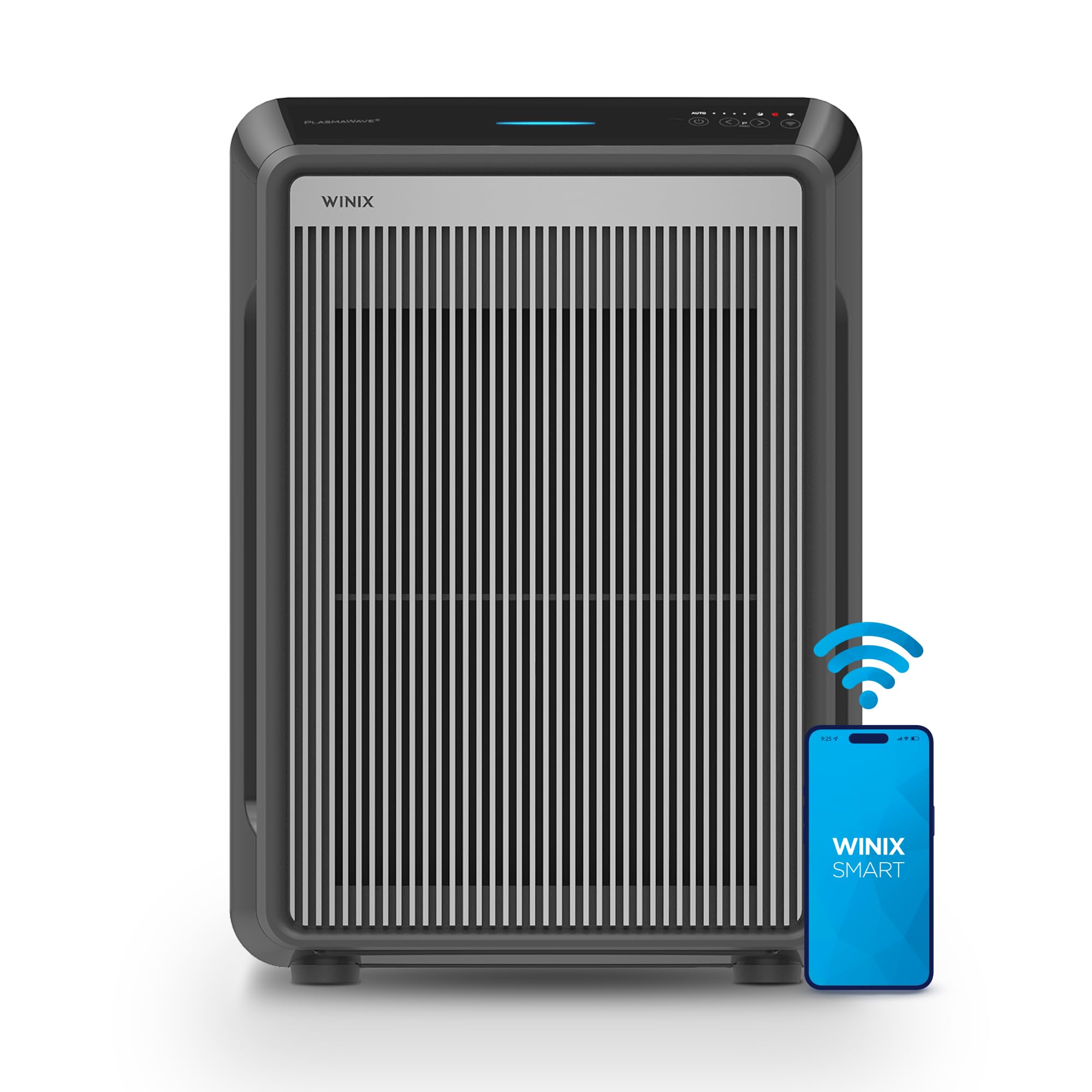

Product comparison
The two models
Product A
Winix 9800
Best fit: Wi-Fi households in substantial rooms
Why choose it: AHAM room rating and Filter A program
Main trade-off: HEPA and carbon change at different times
Last checked price
$299.99
Paid link · PIQSY may earn a commission
Product B
Blue Pure 211i Max
Best fit: Large rooms prioritizing peak flow
Why choose it: Higher published large-room particle delivery
Main trade-off: Larger size and separate consumables
Last checked price
$349.00
Paid link · PIQSY may earn a commission
Some shopping links may pay PIQSY a commission if you make a qualifying purchase. Editorial assessments remain independent. Affiliate disclosure
What matters when choosing
Choose Blueair Blue Pure 211i Max when higher published particle delivery for a large room is central to the purchase. Consider Winix 9800 when its Wi-Fi controls and specific filter-maintenance system better fit your home and its AHAM room reference covers the actual space. This is not a contest decided by one review average or an unverified annual price.
Blueair reports 435 CFM manufacturer smoke CADR and 674 square feet at 4.8 ACH. Winix reports an AHAM-verified 522-square-foot room reference at 4.8 ACH. Because both area references use the same stated air-change assumption, the Blueair belongs to a larger rated room class on paper. But an equal-method maximum-smoke CADR comparison for the selected Winix 9800 child is not established here, so don't invent one.
Match the job before the feature list
The 211i Max is a compelling candidate for a larger family room where the primary objective is repeated particle filtration. The Winix 9800 is more relevant if your room fits its 522-square-foot high-turnover reference and you value Wi-Fi control or its filter maintenance structure.
Don't forget ceiling height. A 500-square-foot living room with high ceilings has more air to clean than one with an ordinary ceiling, even though the floor plans look identical. Count the space connected through open doorways too. Neither machine is a one-box answer for an entire apartment if the rooms and airflow paths don't allow even circulation.
Both devices need a useful location with unobstructed intake and exhaust. Your daily operating speed matters more than the number of buttons or the size of a digital display.
Where the performance evidence stops
Blueair provides a published smoke CADR of 435 CFM. A separate RTINGS model-family test of the 211i Max contains method-specific PM1 results. Those are not the manufacturer's smoke CADR, even if the values look close. Before applying that test result to a particular US offer, confirm the exact model and any relevant accessory differences.
For the Winix 9800, the official 522-square-foot AHAM claim at 4.8 ACH provides a clear sizing reference. But a comparable laboratory airflow-versus-noise result for the exact store version is not established. It would be misleading to compare a Blueair maximum PM1 number with a non-existent equivalent 9800 figure or turn the AHAM room area into an independently measured silent performance score.
The practical conclusion is narrower and more useful: Blueair has a larger published capacity role; Winix is a plausible substantial-room alternative when the room is compatible and its controls matter to you.
Maintenance may be the deciding factor
Winix identifies Filter A, part 115115, for the 9800. Its model-level information distinguishes about 12 months for HEPA from about three months for carbon. Treat those as separate service obligations. Calling the 9800 a single annual filter purchase would misstate the routine.
Blueair uses its genuine Blue Pure 211i Max Particle + Carbon replacement, with a manufacturer-source reference of roughly nine months. A different Blue Pure size or unrelated Winix filter should not be assumed compatible.
Current filter prices, package contents and delivery charges need to be checked at the time of purchase. Older manufacturer price lists don't establish what either machine costs to run in the US today. If maintenance convenience matters more than maximum airflow, compare the actual filter tasks you would perform, not only a theoretical replacement bill.
Are the owner reviews useful?
An earlier Winix 9800 retailer review sample included a small number of incentivized reviews. That is not a sufficiently independent, representative owner-feedback pool, and it doesn't establish a broad satisfaction consensus. A retailer star average for either model is also not an independently screened exact-US-model sentiment analysis.
This does not mean Winix is unreliable or buyers dislike it. It means the evidence isn't strong enough to make a sweeping owner-experience claim. Look for relevant exact-model feedback and verify the current seller's condition, support and return terms.
Wi-Fi, noise and power
Wi-Fi may help you schedule the Winix or change settings remotely. It is a genuine convenience if it improves how often you run the purifier. However, a particle-sensor indicator isn't a measurement of every harmful gas, chemical or odor.
Blueair lists a 23–53 dB manufacturer noise range. Without comparable airflow at a fixed sound level for the 9800, the two cannot be ranked as a proven quiet-performance pair. A lower fan speed typically means less clean-air delivery, so neither machine should be assumed to clean at its maximum rating in sleep mode.
The Blueair's published 46-watt rating is not a typical annual bill. The Winix likewise needs a source-backed, setting-aware electricity estimate before a dollar saving can be claimed. Count filters, electricity, the current appliance offer and expected lifespan under consistent assumptions.
Which would we choose?
Choose 211i Max when you need its larger high-turnover room role and are comfortable with the Blueair parts and controls. Consider Winix 9800 when your room is within its 522-square-foot, 4.8-ACH reference and its Wi-Fi and separate Filter A/HEPA/carbon upkeep suit you.
If both feel oversized, look at Blue Pure 311i Max or Coway Airmega 250. If the main problem is persistent chemical fumes or moisture, address the source and ventilation rather than expecting either particle purifier to fix it.
PIQSY conclusion
The Blueair is the more obvious large-room airflow-first candidate based on the stated specifications. The Winix is an alternative for a somewhat smaller substantial room and buyers who value Wi-Fi and its identifiable filter system. Do not compare a rated smoke CADR to an unrelated laboratory PM1 value, or treat a handful of incentivized reviews as owner consensus. Check the exact US model, genuine filters and current seller details before making the final call.
Final comparison
Which fits your priorities?
Product A
Winix 9800
Choose when: Consider the 9800 for a larger bedroom, enclosed living room or home office where Wi-Fi convenience helps you keep the device running consistently.
Read Verdict →Product B
Blue Pure 211i Max
Choose when: Choose the 211i Max if airborne particle reduction in a relatively large, regularly occupied room is the main assignment.
Read Verdict →Product details
Model details
See available model specifications
| Detail | Winix 9800 | Blue Pure 211i Max |
|---|---|---|
| US model | Winix 9800 | Blue Pure 211i Max |
| Color | Black | White/ Slate |
| Brand | Winix | Not recorded |
| Product Dimensions | 11.8"D x 16.5"W x 23.2"H | 14.4 x 14.4 x 22.7 inches; 3.97 pounds |
| Power Source | ac | Corded Electric |
| Item Weight | 19 pounds | 1.8 kg |
| Control Method | Touch | App |
| Filter Type | HEPA | Activated Carbon |
| Floor Area | 5380 square_feet | 3234.75 square_feet |
| Noise Level | 26.2 db | 23 db |
| Particle Retention Size | 0.3 micron | 0.1 micron |
| Controller Type | Amazon Alexa, Android, Button Control, iOS | Amazon Alexa, Android, Button Control, iOS |
| Wattage | 95 watts | 46 watts |
| Contaminant Filtration Capability | High | Viruses, smoke, pet dander, pollen, mold, dust |
| Special Features | WiFi, 500 square feet, true HEPA | Corded |
| Filter Class | HEPA | HEPASilent |
| Software Update Supported to Date | unknown | unknown |
| Item Dimensions D x W x H | 11.8"D x 16.5"W x 23.2"H | 14.4"D x 14.4"W x 22.7"H |
| Brand Name | Winix | BLUEAIR |
| Model Number | 9800 | Blueair 211i max |
| Model Name | Winix 9800 | Blue Pure |
| Number of Packs | 1 | 1 |
| Unit Count | 1 Count | 1 Count |
| Manufacturer | Winix | Blueair |
| Warranty Description | 2 Year | Not recorded |
| Included Components | True Hepa and Carbon Filters (1 Year) | Air purifier, pre installed-filter, washable fabric pre-filter |
| Item Type Name | Air Purifier | Air Purifier |
| Part Number | 1022-0228-02 | 109556 |
| Specification Met | AHAM Certified, CARB Certified, UL Certified | AHAM Certified |
| Item model number | Not recorded | Blueair 211i max |
| Date First Available | Not recorded | November 21, 2022 |
| UPC | Not recorded | 689122023045 |
| Item Highlight | Not recorded | WiFi, Auto Mode, Quiet 23dB HEPASilent Filtration, AHAM Verified, Washable Pre-Filter, Captures Pet Hair Allergens Dust Smoke |
Source: exact-US retained listing observations (latest checked 11/3/2026). Check current configuration with the manufacturer; these are not comparative performance tests.
Keep comparing
Related comparisons worth checking.
Blueair Blue Pure 211i Max vs. Winix 5500-2: bigger-room airflow or simpler upkeep?
The manufacturer sources support different ways of describing these machines.
Blueair Blue Pure 211i Max vs. 311i Max: which size belongs in your room?
Blueair's US manufacturer specifications report 435 CFM smoke CADR and 674 square feet at 4.8 air changes per hour for the 211i Max.
Coway Airmega 400S vs. Blueair Blue Pure 211i Max: which large-room purifier fits?
Coway reports 328 CFM smoke CADR for Airmega 400S and 1,560 square feet at two air changes per hour.
Our research approach
How to interpret the product details.
Our research approach
How to interpret the product details.