PIQSY verdict
Shark AV2501S AI Ultra Robot Vacuum
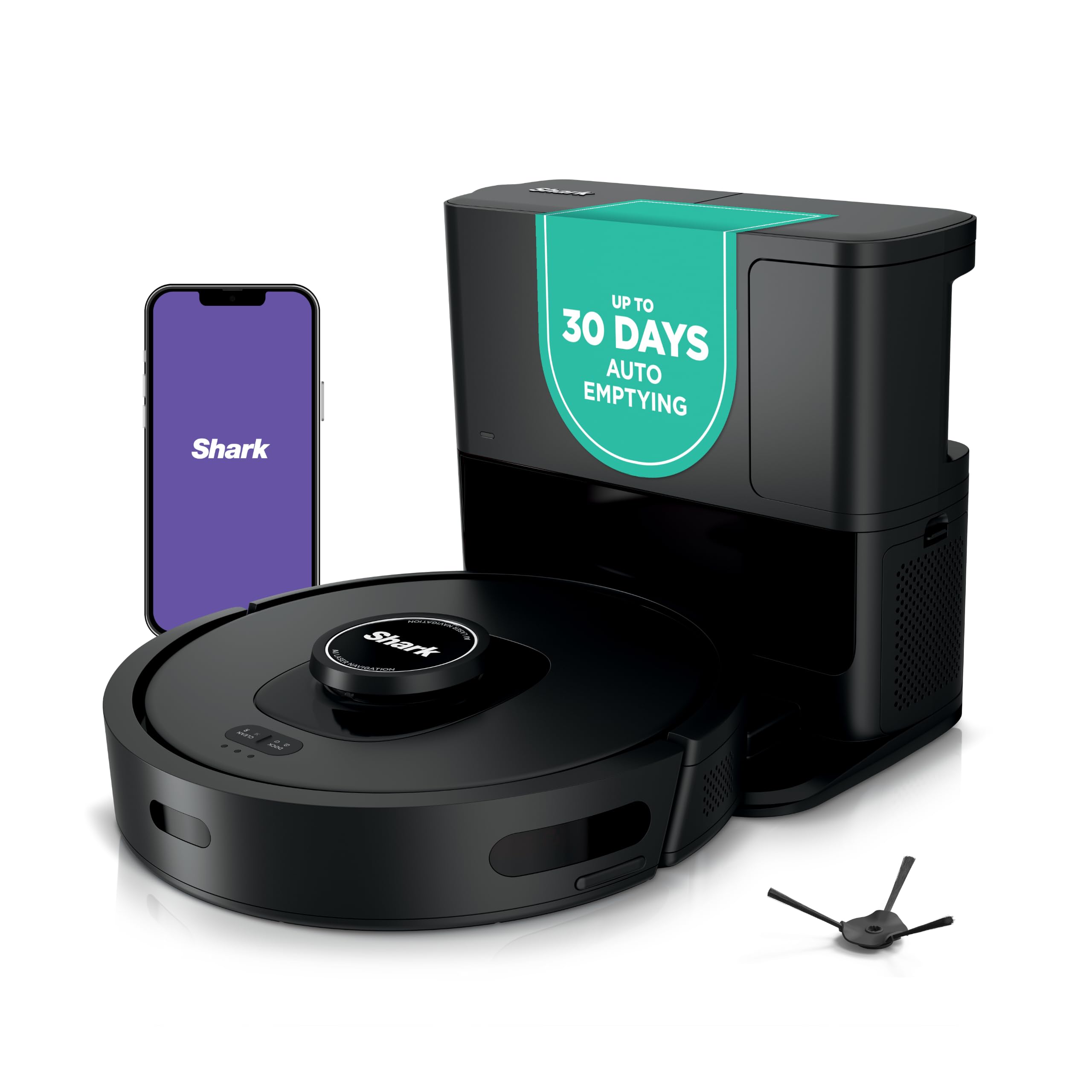
The Shark AI Ultra Robot Self-Empty AV2501S is a vacuum-only robot built around that choice.
Best fit
- Bagless dust disposal
- Mapped dry cleaning
Skip if
- Choose a bagged auto-empty robot if you care more about contained dust disposal than eliminating disposable bags.
Main compromise
The trade-off is that emptying a bagless bin exposes you to more loose debris than dropping a sealed disposable bag in the trash.
Last checked price
$279.99
Amazon rating
★ 4.0 · 32,478 ratings
Amazon.com snapshot · Nov 3, 2026
Some shopping links may pay PIQSY a commission if you make a qualifying purchase. Editorial assessments remain independent. Affiliate disclosure
What matters
Why it earns consideration — and why you might skip it.
Who it fits
Prefer emptying a reusable dust container to buying bags? The Shark AI Ultra Robot Self-Empty AV2501S is a vacuum-only robot built around that choice. It maps rooms with LiDAR and returns to a bagless dock that collects debris. The payoff is fewer trips to empty the robot's small bin, although you'll still need to empty and clean the dock container yourself.
If you mostly vacuum hard floors and want a mapped cleaning schedule, the design is straightforward to understand. You do not have to maintain mop pads or water tanks, and the base stores collected dust until you empty its container. The trade-off is that emptying a bagless bin exposes you to more loose debris than dropping a sealed disposable bag in the trash.
You should also approach the carpet story carefully. RTINGS' hands-on review(https://www.rtings.com/robot-vacuum/reviews/shark/ai-ultra-robot-av2501ae-av2501s-av2511ae-rv2502ae) reports decent bare-floor pickup but struggles with solid debris and embedded pet hair on low-pile carpet. This is not a machine to call a universal pet-hair winner on the strength of a self-cleaning brush claim or an online rating.
What changes the decision
Would you rather empty a reusable bin than replace bags?
This is the strongest reason to choose the AV2501S. When the robot returns to its station, debris is moved into a bagless base instead of a disposable bag. That saves the need to buy replacement dock bags and avoids finding somewhere to store them.
There is no free disposal method, however. With a bagless container, you will eventually tip dust and hair into a trash can and clean the receptacle. Fine debris can become airborne during that process. If you particularly dislike dust clouds or want the simplest contained disposal, a robot with a bagged dock may suit you better despite the recurring bag cost.
Shark promotes roughly 30 days of debris storage for the AV2501S base. That is a conditional manufacturer claim, not a guarantee of a monthly emptying schedule. Homes with pets or high debris volume may need attention sooner. Treat the base as a way to reduce daily handling, not remove dust-bin care permanently.
Does a vacuum-only robot match your floor mix?
The AV2501S has no wet-mop mode. That eliminates water refills, dirty-water disposal and mop-pad washing, which is useful if most of your home is carpet or you already wash the kitchen and bathroom manually.
The benefit disappears when your main frustration is sticky residue or paw prints on hard floors. A robot that only vacuums will not clean dried-on spills. Do not confuse AV2501S with Shark's 2-in-1 or NeverTouch Pro mop-equipped ranges; a similar brand name or self-emptying dock does not make the hardware equivalent.
On hard flooring, RTINGS described decent pickup. That is more useful evidence than an unspecified promise of powerful suction, but the distinction between light debris and persistent embedded mess still matters. If your vacuum's everyday job is collecting crumbs and surface dust between deeper cleanings, the configuration is coherent.
How seriously should you take the carpet and pet-hair limitations?
For households with shedding pets and significant low-pile carpet, the independent results are a substantial warning. RTINGS reported difficulty lifting pet hair embedded in carpet fibers and noted that extra passes were needed. Fine debris near walls and corners also challenged the robot.
That result is different from how well it cleans a hard floor. A robot can pick up visible hair from tile yet leave a meaningful amount stuck in carpet. If you have a dog that spends most of its time on low-pile rugs, you may still need to use a stronger conventional vacuum frequently.
One model-number detail matters at checkout. RTINGS tests the AV2501AE, AV2501S, AV2511AE and RV2502AE together as a related family, so its cleaning observations are useful context. But those robots may have different docks or accessories. The bagless dock described here is specifically supported by Shark's AV2501S information.
Avoid claiming that a brush described as self-cleaning is completely free from hair wrap. RTINGS still noted long hair could become caught and require brush access. That means routine inspection remains part of ownership even when the dock automates bin emptying.
What does LiDAR mapping improve, and what does it not?
LiDAR lets the Shark plan routes through mapped spaces instead of cleaning by a random sequence of bumps. You can use its app-based controls for repeatable room cleaning and scheduled maintenance. This is a useful feature when furniture is stable and you want the robot to cover predictable parts of a home while you work or cook.
But a floor map is not an all-purpose object-recognition system. RTINGS observed that certain cords and other everyday objects could confuse or obstruct the robot, and its tall sensor housing can limit access beneath low furniture. The safest routine still involves removing loose cables, socks and fragile items before a run.
If you need the robot to reliably recognize pet waste, toys or cable clutter without preparation, look for a model with independently corroborated small-object avoidance. Mapping alone should not be sold as proof of that capability, regardless of the "AI" in the product name.
Will this system really be lower maintenance?
Removing mop care is convenient, but the vacuum itself still needs attention. Empty the dock container when full, clean accessible filters, examine brushes for wrapped hair and check wheels and charging contacts for debris. Bagless collection changes the location and frequency of the dust task, not whether dust exists.
RTINGS described the Shark's maintenance demands as fairly involved, and its review warned about recurring replacement components. That does not invalidate the bagless-dock idea, but it means you should not equate "no dust bags" with "no ownership costs." Brush and filter life, replacement availability and cleaning habits still matter.
For someone who wants contained disposal rather than reusable parts, this is the wrong compromise. For someone who dislikes recurring bag purchases and is comfortable emptying a container outside or into a trash can, it may be exactly the right one.
Does it fit your furniture and connected-home preferences?
A protruding LiDAR tower makes the AV2501S a different proposition from a genuinely low-profile robot. Measure the under-sofa or under-bed opening before buying and allow clearance for rugs or uneven flooring. Do not assume it reaches places that a slim-profile machine can access.
The Shark also relies on connected navigation and app controls for its most useful mapped routines. A buyer who wants a simple non-Wi-Fi remote-controlled appliance will not benefit from its full feature set. The robot's capabilities make the most sense when you are comfortable with setup and periodic app interaction.
Long-term owner experiences are less clear: some available US reviews are reposted Amazon material, and too few have been verified for this exact model. So a family-wide star rating isn't enough to judge durability or identify a dependable pattern of complaints.
Owner views
Owner feedback still developing
Owner feedback is still developing, so PIQSY is not presenting a consensus yet.
Who should choose something else
Choose a bagged auto-empty robot if you care more about contained dust disposal than eliminating disposable bags. A bag is an ongoing consumable, but some buyers prefer that maintenance trade-off.
Choose a robot that mops and washes its pads if you need regular wet cleaning of suitable sealed hard floors. The AV2501S is vacuum-only and its dock cannot be upgraded into a mop-washing station.
If pet hair embedded in carpet is the main shopping priority, look for a model with convincing exact-model carpet-hair testing. If small clutter avoidance is non-negotiable, choose based on tested obstacle behavior rather than the presence of LiDAR alone.
PIQSY conclusion
Choose the Shark AI Ultra AV2501S when you want mapped, routine vacuum-only cleaning and a reusable, bagless self-emptying base. Its most defensible advantage is a specific ownership preference, not an unsupported claim to the strongest suction or pet-hair performance.
Skip it when your home is predominantly low-pile carpet with heavy shedding pets, when wet mopping matters, or when you dislike handling loose dock debris. We do not have a verified current US price for this exact model, so value and availability must be checked independently at the final shopping stage.
FAQ
Does the Shark AV2501S mop? No. This is the vacuum-only Shark AI Ultra package with a bagless self-emptying base.
Do I have to buy dust bags? The AV2501S base is bagless. You still need to empty and maintain its reusable dust container.
Is it effective for pet hair on carpet? RTINGS found poor pickup of embedded hair on low-pile carpet in its variant-family testing. Do not assume strong results based on pet-focused marketing.
Does its LiDAR avoid cables automatically? Mapping helps plan routes, but it does not guarantee avoidance of small cords or loose items. Clear sensitive clutter before an unattended run.
Technical detail
Specifications
See full specifications
| Product | Shark AV2501S AI Ultra Robot Vacuum |
|---|---|
| US model | Not independently confirmed |
| Brand | Shark |
| Model Name | AI Ultra |
| Surface Recommendation | Carpets & Hard Floors |
| Special Feature | Bagless, Pet Hair Pick Up, Self-Cleaning Brushroll, Self-Emptying |
| Color | Dark Grey |
| Other Special Features of the Product | Bagless, Pet Hair Pick Up, Self-Cleaning Brushroll, Self-Emptying |
| Controller Type | App Control |
| Filter Type | Foam |
| Battery Life | 120 minutes |
| Battery Type | Lithium Ion |
| Voltage | 120 volts |
| Capacity | 0.09 liters |
| Power Source | Battery Powered |
| Control Method | Voice |
| Compatible Devices | Amazon Alexa, Google Home |
| Form Factor | Robotic |
| Indoor Outdoor Usage | Indoor |
| Number of Wheels | 2 |
| Number of Speeds | 1 |
| Recommended Uses For Product | Regular home cleaning, Pet hair cleaning |
| Style Name | Matrix Dry Auto Empty (30 days) |
| Brand Name | Shark |
| Included Components | Filter, HEPA Self-Empty Base, Shark AI Robot, Side Brush |
| Model Number | AV2501S |
| Global Trade Identification Number | 10622356585757 |
| UPC | 622356585750 |
| Manufacturer Warranty Description | 1 year limited warranty. |
| Number of Packs | 1 |
| Item Type Name | Shark AV2501S AI Robot Vacuum with HEPA Self-Empty Base, Bagless, 30-Day Capacity, LIDAR Navigation, Perfect for Pet Hair, Compatible with Alexa, Wi-Fi Connected, Dark Grey |
| Manufacturer | SharkNinja |
| Number of Items | 1 |
| Manufacturer Part Number | AV2501S |
| Item Dimensions L x W x H | 13.7"L x 13.7"W x 4.1"H |
| Item Weight | 14.4 pounds |
| GTIN | 622356585750 |
Amazon.com technical listing observed Nov 3, 2026. Confirm exact configuration with the manufacturer.
Final decision
Ready to choose, or want one more check?
Buying options
Check the current offer.
Amazon.com · Checked Nov 3, 2026
A verified buying link is not available here right now. Check the retailer for current prices and availability.
Our research approach
How to interpret the product details.
Our research approach
How to interpret the product details.