
PIQSY Picks
Best dehumidifiers for different rooms and drain setups
The best portable dehumidifier depends on the moisture load and what happens to the collected water. For a small, moderately damp room, start with a 20- or 22-pint model. For a persistently damper space, a 35-pint Frigidaire can be the middle ground. For a wet basement, the 50-pint class makes more sense—but choose gravity or pump drainage before settling on a product.
The decision this shortlist answers
Quick answer: The best portable dehumidifier depends on the moisture load and what happens to the collected water.
Some shopping links may pay PIQSY a commission if you make a qualifying purchase. Editorial assessments remain independent. Affiliate disclosure
Product shortlist
Products covered in this guide.
Browse the products covered in this guide. The order does not indicate a ranking.
In this guide
Frigidaire FHDD2233Y1
US model: FHDD2233Y1
This 22.27-pint/day Frigidaire is the uncomplicated conventional option.
In this guide

Midea MAD20S1QWT
US model: MAD20S1QWT
Amazon.com · Checked Nov 3, 2026
The Midea Cube earns its place through a different water-handling arrangement and manufacturer-listed app control.
Paid link · PIQSY may earn a commission
In this guide
Frigidaire FHDD3534Y1
US model: FHDD3534Y1
This 35.85-pint/day certified Frigidaire is the middle option.
In this guide

Frigidaire FHDD5033Y1
US model: FHDD5033Y1
Amazon.com · Checked Nov 3, 2026
The FHDD5033Y1 brings 49.95 pints/day of certified extraction, Wi-Fi and a 1.9-gallon bucket.
Paid link · PIQSY may earn a commission
In this guide
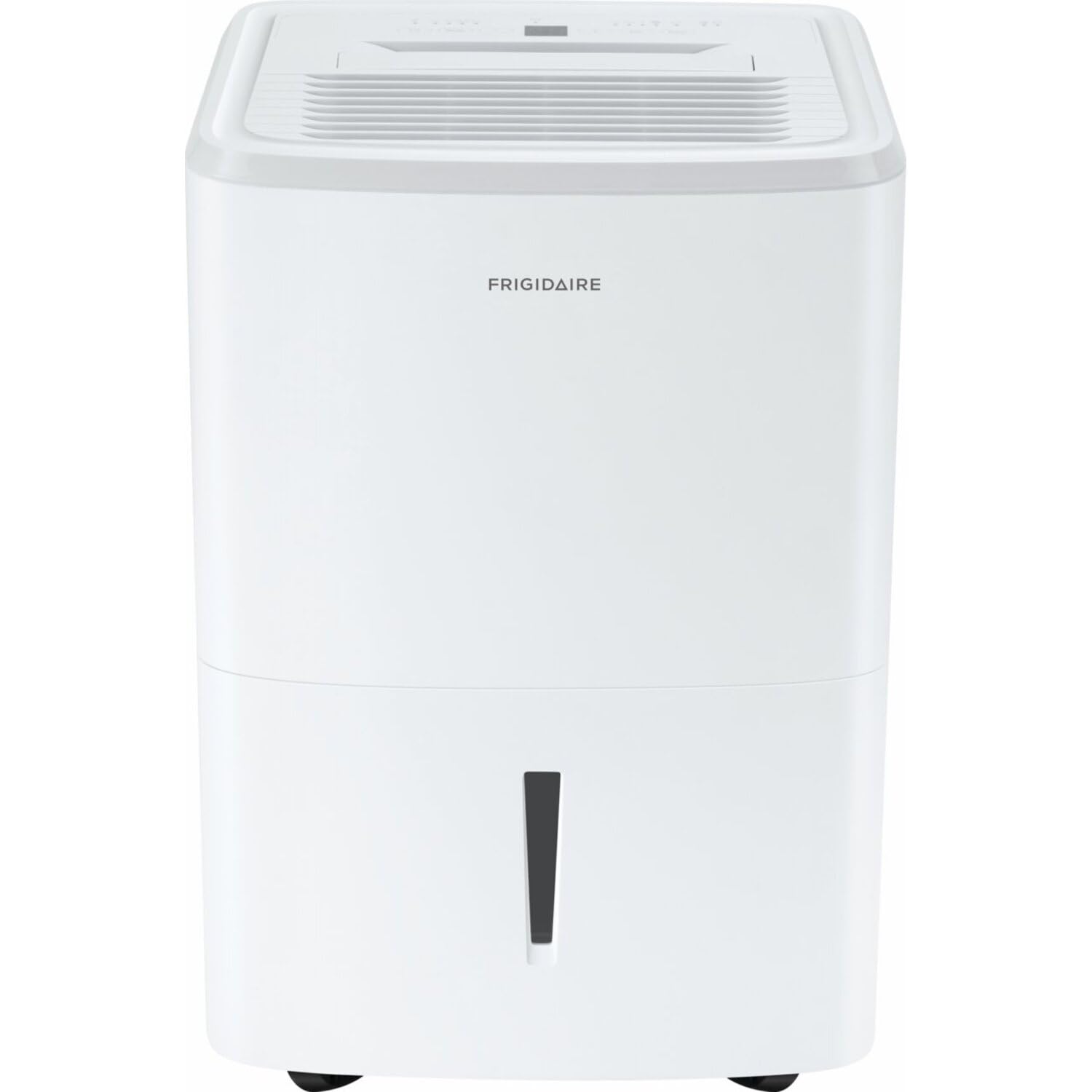
Frigidaire FHDD5034Y1
US model: FHDD5034Y1
Amazon.com · Checked Nov 3, 2026
This model's defining feature relative to the FHDD5033Y1 is its larger 2.7-gallon bucket.
Paid link · PIQSY may earn a commission
In this guide

Midea MAD50PS1QWT-A
US model: MAD50PS1QWT-A
Amazon.com · Checked Nov 3, 2026
The Midea Cube pump model is certified at 49.67 pints/day and has an integrated lift pump.
Paid link · PIQSY may earn a commission
In this guide
Hisense DH5026K1W
US model: DH5026K1W
The DH5026K1W is the non-pump Hisense in the 50-pint class, certified at 49.95 pints/day and 2.01 L/kWh.
In this guide
Hisense DH5026KP1G
US model: DH5026KP1G
The DH5026KP1G adds a built-in pump while retaining the matching 49.95 pints/day certified capacity and 2.01 L/kWh integrated efficiency factor of the gravity-only model.
Quick answer: The best portable dehumidifier depends on the moisture load and what happens to the collected water. For a small, moderately damp room, start with a 20- or 22-pint model. For a persistently damper space, a 35-pint Frigidaire can be the middle ground. For a wet basement, the 50-pint class makes more sense—but choose gravity or pump drainage before settling on a product.
These picks are organized around real home setups, not a universal winner. Every model below has a documented US manufacturer identity and an exact-model ENERGY STAR rating. We haven't tested noise, reliability or water collection in a home, and prices that haven't been confirmed don't decide the picks.
Check these essentials before browsing
First, determine whether the room actually needs a portable dehumidifier. If water enters through a wall or pipe, stop that source. If the room is only mildly stuffy, ventilation and a smaller machine may be sufficient. Second, determine where water can go. A lower floor drain favors gravity. An elevated drain can require a pump. Third, consider who will carry a bucket and how much room the appliance can occupy.
Daily extraction ratings describe standardized moisture removal, not bucket volume. All eight picks are compressor-style portable models rather than miniature closet desiccants. No pump model here should be assumed to move water through an arbitrarily high hose, and no product should be treated as a substitute for leak repair.
PIQSY Picks
For a small damp room without app distractions: Frigidaire FHDD2233Y1
This 22.27-pint/day Frigidaire is the uncomplicated conventional option. Its documented 0.85-gallon bucket and lack of Wi-Fi make it most appealing when you can check the unit regularly and don't have a heavy basement moisture problem.
Buy it if:
- You want a compact conventional dehumidifier for a room with moderate moisture.
- You prefer simple local controls to configuring another connected device.
- You can empty a smaller bucket or use a suitable downhill drain.
Skip it if:
- Your basement is repeatedly very wet and demands greater daily extraction.
- Water must travel upward to a higher sink; there is no built-in pump.
- Remote monitoring is essential for where you'll place the machine.
The key trade-off is capacity versus simplicity. The exact-model ENERGY STAR IEF is 1.70 L/kWh, but we are not treating that number as an exact utility bill estimate. Read the Frigidaire FHDD2233Y1 Verdict for the daily water-handling details.
For a smaller room where smart controls matter: Midea Cube MAD20S1QWT
The Midea Cube earns its place through a different water-handling arrangement and manufacturer-listed app control. ENERGY STAR certifies 20.16 pints/day, so this is a smaller-room choice rather than a miniature version of the 50-pint pump model.
Buy it if:
- A modestly damp room suits a 20-pint-class unit.
- You like the Cube reservoir approach and can access it comfortably.
- You will genuinely use app control for a unit located out of the way.
Skip it if:
- Heavy basement moisture calls for 35- or 50-pint-class extraction.
- You need an integrated pump to send water uphill.
- A larger water reservoir would become awkward to lift or clean.
Be careful with similarly named Cube products: capacity, suffix and pump hardware can change. An owner review of a larger Cube isn't proof about this exact US model. Read its Verdict for the installation and temperature constraints.
For moderate dampness with Wi-Fi: Frigidaire FHDD3534Y1
This 35.85-pint/day certified Frigidaire is the middle option. It suits shoppers who think a 20-pint unit may struggle but don't automatically need the largest appliance for a room that is only moderately damp.
Buy it if:
- Your room needs meaningful extraction beyond the compact class.
- You want a conventional bucket or gravity-drain arrangement.
- Remote control would save you a walk to the basement or laundry room.
Skip it if:
- A 20-pint-class machine is already keeping the space comfortable.
- The space regularly faces heavy water loads that justify a larger unit.
- You need to lift collected water above the machine with an integrated pump.
Its Wi-Fi support isn't special to this model within the Frigidaire lineup, but the 35-pint class creates a genuinely different capacity decision. Consult the Verdict to judge the bucket routine and room-size trade-offs.
For 50-pint drying in a shorter cabinet: Frigidaire FHDD5033Y1
The FHDD5033Y1 brings 49.95 pints/day of certified extraction, Wi-Fi and a 1.9-gallon bucket. It is most attractive when you need a high-capacity unit and the cabinet configuration or smaller bucket weight works for your space.
Buy it if:
- Your basement needs the 50-pint daily extraction class.
- You prefer its shorter cabinet to the larger-bucket Frigidaire.
- A floor-level gravity drain or regular bucket emptying is practical.
Skip it if:
- You expect a pump to lift water to a higher drain.
- Fewer water-emptying trips matter more than a smaller full bucket.
- A retailer page's inaccurate 100-pint claim is your reason to buy it.
Both Frigidaire 50-pint siblings have Wi-Fi and the same 2.01 L/kWh integrated energy factor. Pick by cabinet and bucket, not a fictional efficiency win. The individual Verdict explains the difference.
For fewer manual bucket trips: Frigidaire FHDD5034Y1
This model's defining feature relative to the FHDD5033Y1 is its larger 2.7-gallon bucket. It is also certified near 50 pints/day, has Wi-Fi and lists compatibility with an advanced filter option.
Buy it if:
- You have a heavy moisture load and frequently carry water away manually.
- A larger bucket would reduce your number of emptying trips.
- The cabinet dimensions and full water weight remain comfortable for you.
Skip it if:
- A full 2.7-gallon reservoir would be hard to carry safely.
- A shorter cabinet matters more than tank size.
- You need water pumped upward; this remains a gravity-or-bucket model.
The extra bucket capacity is a real convenience, but not a free one: the full bucket weighs more. It doesn't prove better extraction or efficiency than the other Frigidaire 50-pint option. See the side-by-side Compare and its individual Verdict.
For a pump with a published lift limit: Midea Cube MAD50PS1QWT-A
The Midea Cube pump model is certified at 49.67 pints/day and has an integrated lift pump. The maker's US manual gives 14 feet maximum pump height for covered pump models. That's useful when an elevated sink is your only suitable outlet.
Buy it if:
- You need 50-pint-class extraction and a suitable elevated drain.
- Your required vertical rise and hose route meet Midea's exact manual.
- You prefer the Cube water-handling design and will maintain its pump setup.
Skip it if:
- Your drain is more than the documented pump limit can support.
- A simple gravity hose already disposes of water easily.
- An unheated room often falls below the maker's 41°F operating guidance.
Midea states that pump mode can't be used in its bucketless operating configuration. Also, the exact -A suffix matters; pooled retailer reviews across Cube versions don't support a reliability claim for this one. Its Verdict explains installation planning.
For a straightforward floor drain: Hisense DH5026K1W
The DH5026K1W is the non-pump Hisense in the 50-pint class, certified at 49.95 pints/day and 2.01 L/kWh. A downhill water route is the clearest reason to choose it.
Buy it if:
- Your basement has an accessible lower floor drain.
- You want 50-pint extraction without an integrated pump.
- You are comfortable inspecting a gravity hose or emptying a tank.
Skip it if:
- The only workable drain is higher than the appliance.
- You need a compact machine for merely occasional humidity.
- You require verified independent bedroom-noise data before deciding.
Its pump-equipped sibling has matching certified moisture-removal and efficiency figures. The simpler drainage format is the selling point. Don't rely on an indexed retailer stock message without checking current availability.
For an elevated drain with a conventional cabinet: Hisense DH5026KP1G
The DH5026KP1G adds a built-in pump while retaining the matching 49.95 pints/day certified capacity and 2.01 L/kWh integrated efficiency factor of the gravity-only model.
Buy it if:
- Your water route genuinely needs an integrated lift pump.
- You prefer the conventional Hisense cabinet format over a Cube setup.
- You can verify the exact pump and drain-hose installation for your room.
Skip it if:
- Your basement floor drain already provides simple gravity disposal.
- The required lift height has not been checked against the exact manual.
- You are assuming the included 16-foot hose guarantees 16 feet of vertical lift.
We cannot promise this model's maximum lift from its hose length. Confirm the installation before buying, and see its detailed Verdict for other basement trade-offs.
Buying advice: how to make the final call
Capacity comes first. A small room with moderate moisture is more likely to call for the 20- or 22-pint class. A moderately damp bigger room can favor 35 pints. A consistently wet basement can justify 50 pints. Those are use-case directions, not universal square-foot thresholds. Don't use a big advertised coverage number to ignore the conditions in your own room.
Drainage is next. For a floor drain below the appliance, gravity can be simple. For a sink above the unit, a pump may be necessary. Check maximum vertical lift and hose routing. It is easy to buy a technically capable machine that is physically wrong for the house.
Think about the person emptying the bucket. A 2.7-gallon tank cuts potential trips but increases the water load in your hands. A smaller reservoir is easier to carry but may fill more often. If the machine is on a different floor from the sink, this could matter more than its app.
Keep climate and safety in view. An unheated winter basement can fall below a compressor dehumidifier's supported temperatures. Midea's current shared US manual specifies at least 41°F for its covered models. Other manufacturer's low-temperature claims should be matched to the exact model and manual, not taken as a promise of full capacity in near-freezing air.
Use evidence fairly. The five exact 50-pint models here with published certification all share 2.01 L/kWh. That is no basis for ranking one as the energy winner. We also do not have clean, sufficiently large owner-review samples to declare a universal reliability winner. Online reviews of a different capacity or pump suffix can be misleading.
Compare your options before checking out
If you are deciding between Frigidaire FHDD5033Y1 and FHDD5034Y1, the key question is whether you want the shorter cabinet/smaller bucket or the larger 2.7-gallon bucket. If you're looking at Hisense DH5026K1W versus DH5026KP1G, ask whether the drain sits below or above the machine.
If the question is 35 versus 50 pints, focus on actual dampness, not Wi-Fi. If it's Midea 20-pint Cube versus 50-pint pump Cube, you're deciding both the moisture class and drainage hardware—not simply paying more for the same product family.
When none of these picks fits
Sometimes the right answer is to buy none of these eight. If water is coming through a basement wall or from a leaking pipe, fix that source first. A portable dehumidifier can help with lingering airborne moisture, but it isn't waterproofing equipment or a machine for pumping floodwater off the floor.
If your only acceptable drain is higher than the machine, and you cannot confirm a pump model can lift the water through the required route, don't assume that an included hose solves the problem. Recheck the actual rise and the exact manufacturer instructions. A pump that cannot reach your sink isn't the convenient option it first appears to be.
And if your basement regularly gets very cold, pay attention to operating-temperature requirements. Midea's covered Cube models have a stated 41°F minimum in their US manual. Don't buy one of them for a room that routinely falls below that threshold just because the daily pint rating looks generous.
Finally, if you need a whole-home humidity system across multiple floors or you want a tiny rechargeable closet desiccant, you are shopping for a different solution. Portable compressor models are designed for a different scale and routine. Buying an appliance that matches the real problem is more useful than choosing the biggest number or the longest feature list.
Where to go next
Read the individual Verdict for the exact model configuration, then the relevant two-model Compare if you're close to a decision. Check the current US seller, return policy, availability and exact model suffix before purchasing. Prices and retailer stock can move independently of the best fit.
The most helpful dehumidifier is the one that keeps humidity manageable and gets the water out of the room without creating a chore you won't keep up with.
Compare the shortlist
Understand the alternatives.
Use the buying advice above for trade-offs. Compare model details here, and open a Verdict where available.
Frigidaire FHDD2233Y1
US model: FHDD2233Y1
This 22.27-pint/day Frigidaire is the uncomplicated conventional option.
Read Verdict →Midea MAD20S1QWT
US model: MAD20S1QWT
The Midea Cube earns its place through a different water-handling arrangement and manufacturer-listed app control.
Read Verdict →Frigidaire FHDD3534Y1
US model: FHDD3534Y1
This 35.85-pint/day certified Frigidaire is the middle option.
Read Verdict →Frigidaire FHDD5033Y1
US model: FHDD5033Y1
The FHDD5033Y1 brings 49.95 pints/day of certified extraction, Wi-Fi and a 1.9-gallon bucket.
Read Verdict →Frigidaire FHDD5034Y1
US model: FHDD5034Y1
This model's defining feature relative to the FHDD5033Y1 is its larger 2.7-gallon bucket.
Read Verdict →Midea MAD50PS1QWT-A
US model: MAD50PS1QWT-A
The Midea Cube pump model is certified at 49.67 pints/day and has an integrated lift pump.
Read Verdict →Hisense DH5026K1W
US model: DH5026K1W
The DH5026K1W is the non-pump Hisense in the 50-pint class, certified at 49.95 pints/day and 2.01 L/kWh.
Read Verdict →Hisense DH5026KP1G
US model: DH5026KP1G
The DH5026KP1G adds a built-in pump while retaining the matching 49.95 pints/day certified capacity and 2.01 L/kWh integrated efficiency factor of the gravity-only model.
Read Verdict →| Product | US model | Research |
|---|---|---|
| Frigidaire FHDD2233Y1 | FHDD2233Y1 | This 22.27-pint/day Frigidaire is the uncomplicated conventional option. Read Verdict → |
| Midea MAD20S1QWT | MAD20S1QWT | The Midea Cube earns its place through a different water-handling arrangement and manufacturer-listed app control. Read Verdict → |
| Frigidaire FHDD3534Y1 | FHDD3534Y1 | This 35.85-pint/day certified Frigidaire is the middle option. Read Verdict → |
| Frigidaire FHDD5033Y1 | FHDD5033Y1 | The FHDD5033Y1 brings 49.95 pints/day of certified extraction, Wi-Fi and a 1.9-gallon bucket. Read Verdict → |
| Frigidaire FHDD5034Y1 | FHDD5034Y1 | This model's defining feature relative to the FHDD5033Y1 is its larger 2.7-gallon bucket. Read Verdict → |
| Midea MAD50PS1QWT-A | MAD50PS1QWT-A | The Midea Cube pump model is certified at 49.67 pints/day and has an integrated lift pump. Read Verdict → |
| Hisense DH5026K1W | DH5026K1W | The DH5026K1W is the non-pump Hisense in the 50-pint class, certified at 49.95 pints/day and 2.01 L/kWh. Read Verdict → |
| Hisense DH5026KP1G | DH5026KP1G | The DH5026KP1G adds a built-in pump while retaining the matching 49.95 pints/day certified capacity and 2.01 L/kWh integrated efficiency factor of the gravity-only model. Read Verdict → |
Our research approach
How to interpret the product details.
Our research approach
How to interpret the product details.